

[Case Study] Switching from Composting: GOMISER Operates Flawlessly in Freezing Hokkaido
CASE STUDY: Nursery Schools & Childcare Facilities (Hokkaido)
The Extinction-Type Food Waste Disposer GOMISER® Operates Flawlessly in Freezing Hokkaido.
Solving the Dilemmas of “Zero Waste Storage" and “Compost Disposal".
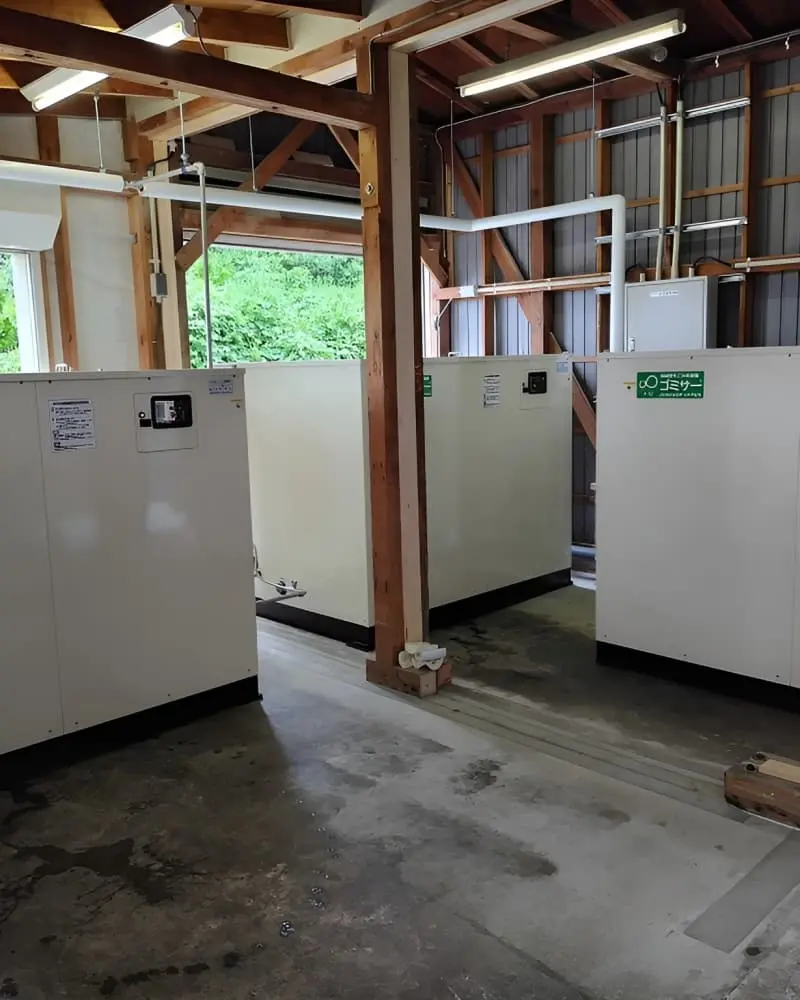
Installed Model: Commercial Food Waste Disposer GOMISER® GH-20
In nursery schools where young children with developing immune systems gather, the “hygiene management of food waste" generated daily from the kitchen is a critical issue. Storing food waste on the premises until collection leads to foul odors, pest infestations, and infection risks, significantly deteriorating the facility’s sanitary environment.
While many facilities introduce “composting food waste disposers" as part of their eco-friendly and food education initiatives, they often face new sources of stress: “excess compost with no use" and “the heavy labor of daily residue removal." Consequently, a never-ending number of facilities abandon their operations. This page introduces a case study of a nursery school in Hokkaido where the system operates stably even in severe cold, solving both hygiene and compost disposal problems.
Three Pitfalls When Choosing Disposers for Childcare Facilities
1. Odors, Pests, and Infection Risks from “Storing Food Waste" on the Premises
Storing food waste in an on-site garbage area for several days until the collection contractor arrives not only creates a breeding ground for foul odors and fruit flies but also encourages the proliferation of food poisoning bacteria. In childcare environments where cleanliness is the top priority, the mere act of storing garbage poses a massive hygiene risk.
2. The Stress of “Residue Removal" and “Excess Compost" from Composting Machines
Facilities that have previously installed composting processors inevitably face the “troublesome residue removal tasks" requiring periodic scraping, and the “disposal of massive amounts of finished compost." Because the school’s vegetable gardens and flower beds simply cannot use it all, facilities often end up paying industrial waste fees to dispose of it, only adding to the burden on the kitchen staff.
3. Anxiety over “Poor Decomposition and Operational Halts" in Sub-Zero Environments
In freezing climates like Hokkaido, standard bio-processors fail to maintain internal temperatures, causing microbial activity to halt and food waste to putrefy. “Can it process waste flawlessly even in winter?" is an absolute selection criterion for facilities in northern regions.
Why the Extinction-Type GOMISER® is the Optimal Choice for Childcare Facilities
The fundamental solution to these challenges is the “Extinction-Type Food Waste Disposer (GOMISER®)," which breaks down food waste entirely into water without leaving any residue. Here is why a never-ending number of facilities switch from composting types to the GOMISER.
[Reason 1] No Residue Removal Required (Complete Extinction-Type)
The GOMISER is an extinction-type system that uses microbial power to break down food waste into “water and carbon dioxide." Unlike composting types, there is absolutely no heavy labor involving shoveling out residue. You simply press a button and toss the waste in, completely freeing kitchen staff from troublesome maintenance.
[Reason 2] Can Be Used as “Liquid Fertilizer" Only When Needed
There is no need to worry about storage space for massive amounts of compost. The processed water from the GOMISER can be safely discharged into the sewer (grease trap), but because it is nutrient-rich, diluting it turns it into high-quality “liquid fertilizer." You can hygienically utilize only the amount you need for the school’s gardens and flower beds.
[Reason 3] Stable Operation Even in Freezing Hokkaido
The GOMISER® features a temperature control function to maintain microbial activity. Even in the harsh winters of Hokkaido where outside temperatures drop below freezing, it maintains the internal temperature so microorganisms can work actively, demonstrating stable processing capabilities year-round.
Hokkaido Nursery School Case Study & Customer Voice
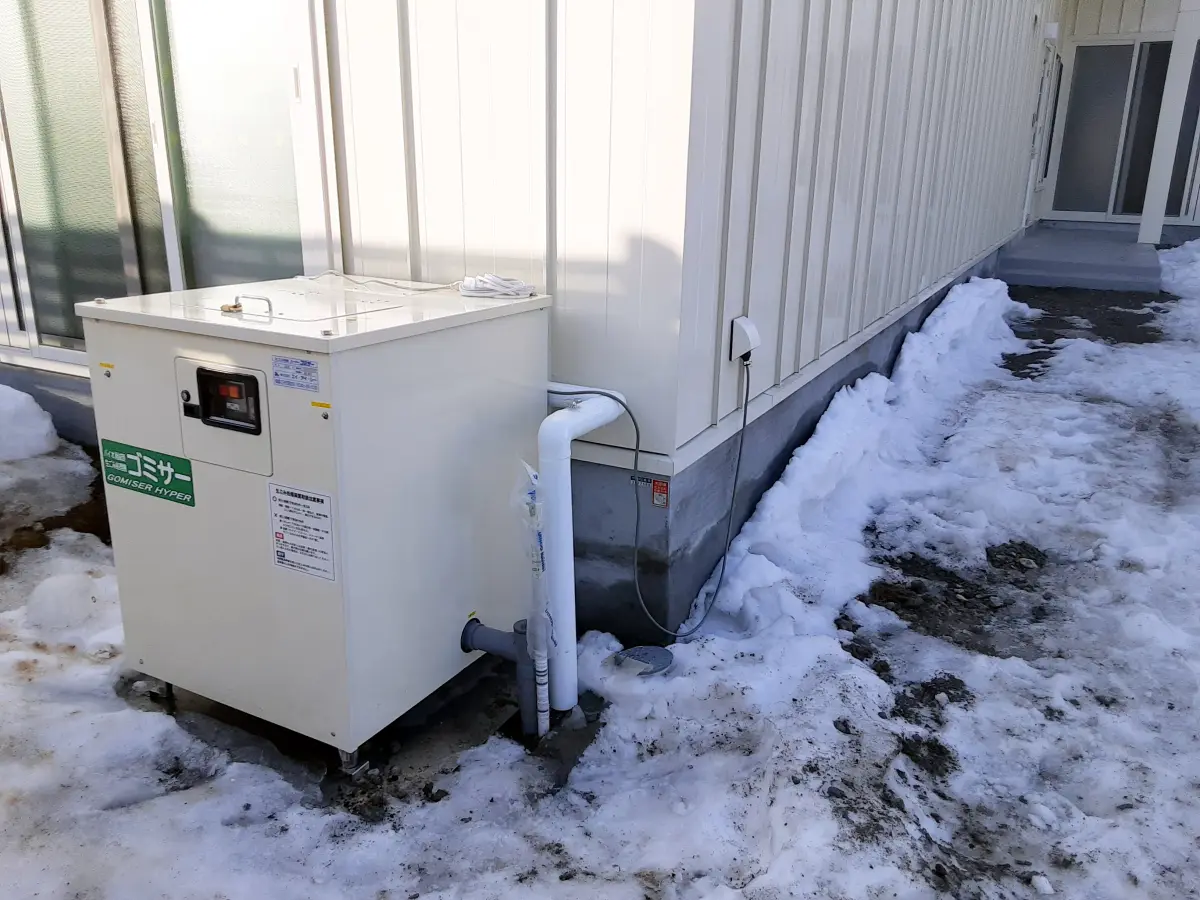
“We introduced the extinction-type food waste disposer to enhance hygiene. Being able to process food waste immediately without having to store it makes our facility highly sanitary.
In the past, we used a composting type, but removing the residue was a hassle, and we struggled with storing and utilizing the compost. I love that the GOMISER’s discharge can serve as liquid fertilizer, allowing us to use it only when needed."
Frequently Asked Questions from Cold-Climate Facilities
Commercial Food Waste Disposer “GOMISER®" GH-20
A compact model with a processing capacity of 20 kg per day. Featuring proprietary cold-climate specifications, it operates stably even in the harsh winters of Hokkaido. As a complete extinction-type processor requiring no troublesome compost removal, it drastically reduces the burden on kitchen staff.
Free Consultation for Educational & Childcare Facilities
Professional Support to Improve Kitchen Hygiene
& Reduce Staff Workloads
Our experienced specialist staff will answer your questions for free, such as “Which model suits our school’s lunch volume?" or “What are the costs of switching from a composting machine?"
We also offer preliminary processing tests and online site hearings.
Simulate the Installation Effects for Your Company for Free
Find out your "cost reduction" and "CO2 reduction" instantly based on your current data.