

[Case Study] Compact Food Waste Disposer Adopted as Standard Equipment | Nursery School
CASE STUDY: Nursery School / Childcare Facility (Chiba Prefecture)
Adopted as “Standard Equipment" by a Social Welfare Corporation Operating Multiple Facilities.
Improving Hygiene Management at a Newly Built Nursery and Reducing the Workload for Childcare Staff.
Equipment Installed: Commercial Food Waste Disposer GOMISER GH-10
Backed by proven operational track records across multiple affiliated facilities, they achieved reliable environmental measures and significantly reduced the workload for childcare staff.
[A Social Welfare Corporation Operating Diverse Childcare Facilities Nationwide]
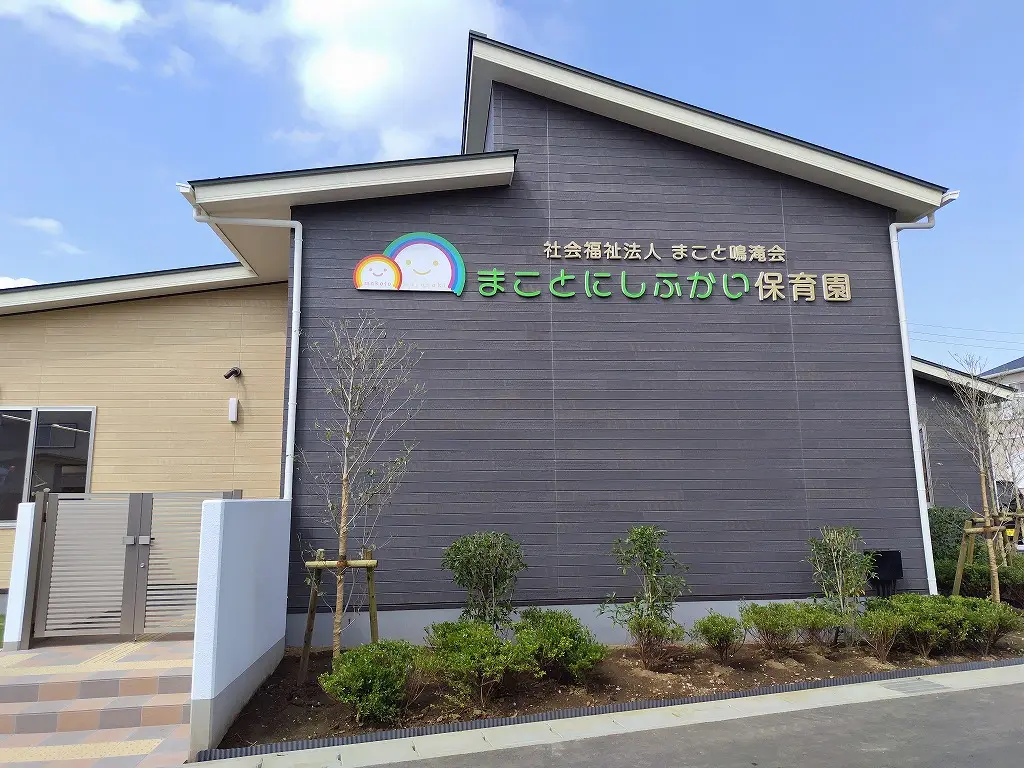
Social Welfare Corporation Makoto Narutakikai – Makoto Nishifukai Nursery School
Location: Chiba Prefecture
Social Welfare Corporation Makoto Narutakikai operates a wide range of certified childcare centers, licensed nursery schools, and company-led childcare facilities across multiple regions in Japan. In September 2026, they installed our compact commercial food waste disposer, “GOMISER GH-10," at their newly opened “Makoto Nishifukai Nursery School" in Chiba Prefecture.
When processing food waste generated from school lunches and snacks, the corporation places the highest priority on “ensuring a hygienic environment for the children" and “reducing the operational burden on childcare staff." As a result, they have already adopted GOMISER in many of their other affiliated facilities. This case study highlights a proactive installation aimed at establishing flawless hygiene measures in conjunction with the grand opening of their newest facility.
■ Background: Hygiene Risks and Labor Challenges Caused by “Storing Food Waste" in Childcare Facilities
[Site Characteristics] In nursery schools and childcare centers, a constant volume of food waste is inevitably generated daily from on-site meal preparation. If this waste is temporarily stored outdoors until collection day, severe decomposition odors during the summer and damage from pests like crows and rats become unavoidable. In facilities where young children with developing immune systems spend their time, this poses an exceptionally high hygiene risk.
Furthermore, repeatedly carrying heavy, moisture-laden food waste to outdoor garbage depots and cleaning up scattered garbage places a massive physical burden on childcare and kitchen staff, who should ideally be focusing entirely on their primary childcare duties.
⚠️ Common Challenges Faced by Many Childcare Facilities
- Hygiene Risks: Foul decomposition odors during storage, generation of pests, and garbage scattered by crows.
- Strained Working Environments: Heavy physical labor required from childcare staff and kitchen crews to dispose of and clean up garbage.
- Neighborhood Considerations: Concerns about complaints regarding foul odors leaking into surrounding residential areas, where schools are often located.
■ Reason for Selection: Proven “Reliability" and “Standardization" Across Affiliated Facilities Nationwide
The biggest deciding factor for the installation at this newly built facility was simply the fact that “GOMISER was already operating in many of the corporation’s other facilities, and they had firsthand experience of its immense benefits."
Through past installations, substantial track-record data had been accumulated proving that decomposing and eliminating food waste into water “completely eradicated odors and pests" and “freed staff from the heavy labor of taking out the trash." Therefore, for the newly built Makoto Nishifukai Nursery School, the decision to adopt the system as “standard infrastructure" to ensure the facility’s hygiene standards was made incredibly smoothly right from the pre-opening preparation stage.
■ Installation & Results: Achieving a Flawless Hygienic Environment and Clean Aesthetics from Day One
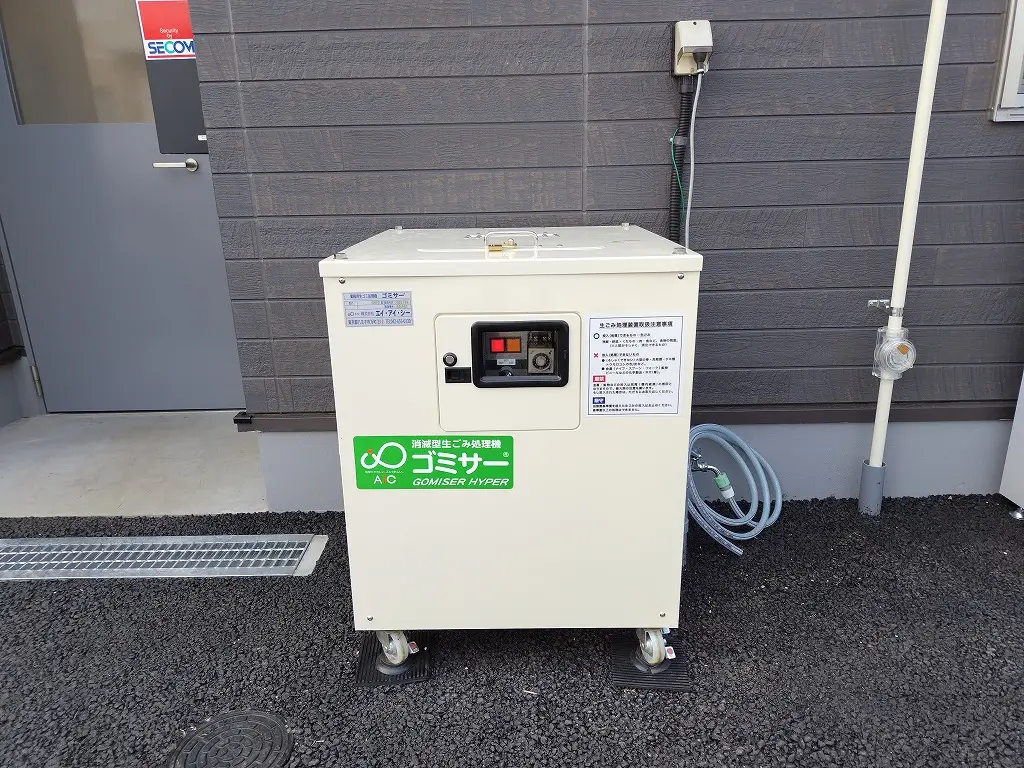
(Photo: The compact GH-10 model neatly installed in the school’s outdoor space)
Based on the facility’s scale and projected waste volume, we installed the space-saving, compact model “GH-10" outdoors, alongside the building exterior. Because it fits neatly with just basic plumbing and a power supply, it does not obstruct the safe movement pathways of the children.
Operations began concurrently with the school’s opening in September 2026, establishing a workflow where food waste is immediately deposited and eliminated the moment it is generated. Consequently, there is absolutely no need to stockpile food waste outdoors, maintaining a pristine environment that gives parents complete peace of mind.
- ✅ Eliminating Hygiene Risks from Day One: Reducing garbage storage to zero completely shuts out crow damage and severe odors at their root.
- ✅ Maintaining Facility Aesthetics: Keeping the garbage depot area free of grime and odors enhances the trust and peace of mind of parents and guardians.
- ✅ Sharing Operational Know-How Across the Corporation: Installing the same equipment as affiliated facilities allows for seamless sharing of operational manuals among staff.
■ AIC Commentary: Expert Insights
In the childcare industry, processing waste such as school lunch residues is a critical infrastructure challenge directly linked to the facility’s hygiene management standards and the working environment of the staff.
[Professional Know-How] The Merits of “Equipment Standardization" Across Multiple Facilities
- ✓
Unifying Solutions at the Corporate Level:
Standardizing equipment for “food waste disposal"—a challenge common to all childcare centers—across the entire corporation, as Social Welfare Corporation Makoto Narutakikai has done, is an exceptionally rational management decision. By horizontally deploying a proven system, new facilities can reliably guarantee top-tier hygiene standards from day one. - ✓
Investing in “Creating a Great Place to Work":
Incorporating a disposal machine during the construction phase not only highlights environmental consideration (SDGs) to the local community but also frees childcare staff from the grueling labor of taking out the trash. Amid recent hiring difficulties, this serves as a highly effective investment toward realizing a “comfortable and attractive workplace."
FAQ from Nursery and Childcare Facility Operators
Commercial Food Waste Disposer “GOMISER" GH-10
The most compact model in our lineup, designed to fit neatly even in the limited spaces of nursery schools and smaller facilities. It fundamentally shuts out foul odors and pest damage, maintaining a pristine and hygienic childcare environment.
Biodigester Consultations, Free Estimates, and Brochure Requests
Professional Support to Achieve
Environmental Improvement & Cost Reduction
We propose the optimal models and installation plans tailored to your specific facility conditions.
Please feel free to ask about “Site Visits" or “Trial Monitor Installations."
Simulate the Installation Effects for Your Company for Free
Find out your "cost reduction" and "CO2 reduction" instantly based on your current data.