

[Case Study] Aino University: Food Waste Disposer GOMISER | AIC
CASE STUDY: UNIVERSITIES & EDUCATIONAL INSTITUTIONS
Aino University (Osaka): Hydroponics Achieved Using Liquid Fertilizer from Food Waste. Embodying SDGs Through an On-Campus “Recycling Loop"
Installed Model: Commercial Food Waste Disposer GOMISER GH-50
Achieved “Low-Odor, Automated Processing" Ideal for a Campus in a Residential Area.
■ Challenges Before Installation: Reducing Environmental Impact and Suppressing Greenhouse Gases
At Aino University, the objective of the installation was to suppress the generation of greenhouse gases and reduce environmental impact by eliminating the disposal of food waste through incineration and landfilling.
⚠️ Challenges at the Time
- Environmental Impact: Generation of greenhouse gases from incineration and landfilling.
- Awareness Raising: Absence of a concrete mechanism to raise awareness of environmental conservation.
- Hygiene Management: Risk of bacteria and virus outbreaks due to food waste being left for long periods.
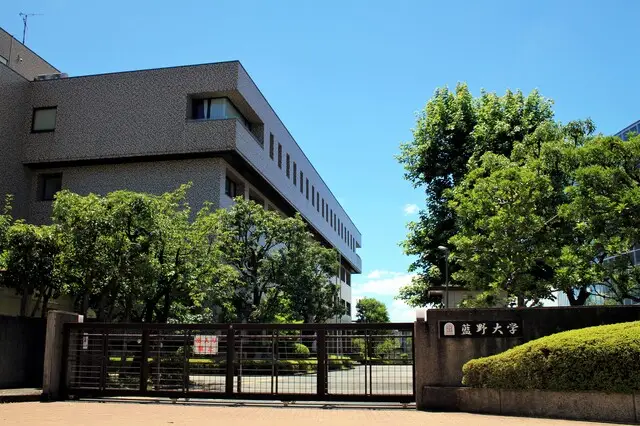
(Photo: Revamping food waste disposal to reduce environmental impact)
■ The Decisive Factor: The Convenience of Decomposing Food Waste into Liquid and Automatically Discharging It
The greatest advantage of choosing GOMISER was its design, which decomposes food waste into a liquid and automatically discharges the generated liquid into the sewer. This eliminates the need to remove residue or pump out liquids, making it the decisive factor in enabling stable waste disposal with minimal burden.
For a Fail-Proof Selection
Food waste disposal at sites where consideration for the neighborhood and hygiene management are strictly demanded, such as residential areas and educational facilities, requires unique expertise. We have published selection criteria derived from AIC’s many years of experience.
▶ How to Choose a Commercial Food Waste Disposer | 6 Points for Success
■ Effects After Installation: A “Food Recycling Loop" Returning Harvested Vegetables to the Cafeteria
They achieved stable processing in a small space without worrying about odors, even within a residential area.
Hydroponics is carried out on campus using the generated liquid fertilizer, and the harvested vegetables are returned to the student cafeteria. This cycle greatly contributes to raising awareness of environmental conservation among students and faculty members.
- ✅ Food Recycling: Established a cycle of growing vegetables from liquid fertilizer and returning them to the cafeteria.
- ✅ Awareness Raising: Educational effects allowing the entire campus to experience the SDGs firsthand.
- ✅ Neighborhood Consideration: Suppresses bad odors and operates in a space-saving manner, even in residential areas.
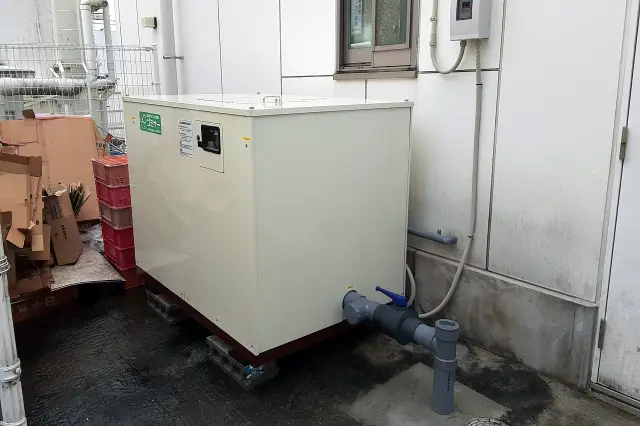
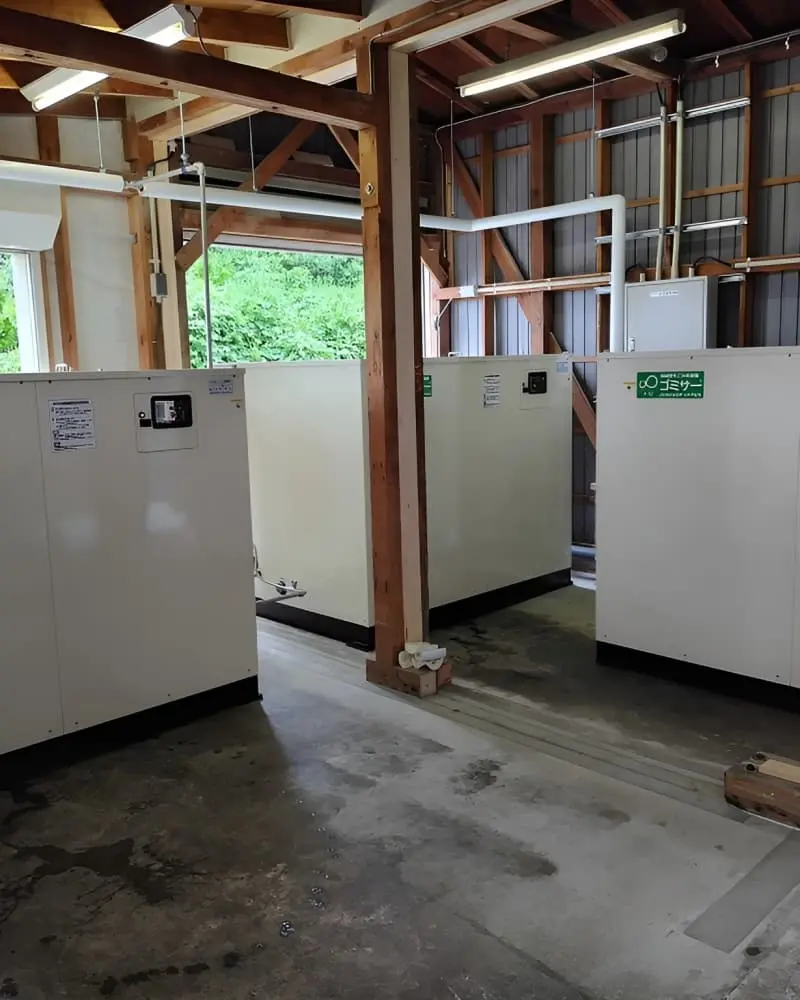
(Photo: GOMISER installation supporting resource circulation on campus)
■ AIC Specialist Comments
Reducing Environmental Impact and Contributing to SDGs
With growing environmental awareness, food waste disposers are attracting attention for their contribution to reducing environmental impact and achieving the SDGs.
Hygienic and Comfortable Work Environment
Introducing a food waste disposer also has the merit of improving the work environment and keeping it hygienic.
- – Odor Reduction: Since the time food waste is stored at the facility is shortened, the generation of bad odors due to putrefaction can be suppressed.
- – Pest/Animal Control: By reducing bad odors, the attraction of vermin and pests such as crows and stray cats can be suppressed.
- – Reduction of Cleaning Effort: Hygienic disposal of food waste reduces the effort required for cleaning.
- – Improvement of Unhygienic Conditions: It reduces the risk of bacteria and virus outbreaks caused by leaving food waste for long periods, keeping the site sanitary.
Q&A Regarding Installation
Installed Equipment
Commercial Food Waste Disposer “GOMISER®" GH-50
An annihilation-type disposer that decomposes food waste into an aqueous solution (liquid fertilizer) and carbon dioxide. Because the processed liquid fertilizer can be recycled for hydroponics on campus, it is ideal for establishing “SDGs (Environmental Education)" and a “Food Recycling Loop" in educational institutions. It features a low-odor, automated processing design that can operate stably without worrying about bad odors or noise even on campuses in residential areas.
Free Consultation for Schools & Educational Institutions
Professional Support to Improve Campus Environmental Education
& Drastically Reduce Total Costs
Our experienced specialist staff will answer your questions for free, such as “How much cheaper will it be compared to our current waste collection fees?" or “How can we build a recycling loop using liquid fertilizer?"
We also offer advice on “online site hearings" and processing tests using actual residue.
Simulate the Installation Effects for Your Company for Free
Find out your "cost reduction" and "CO2 reduction" instantly based on your current data.