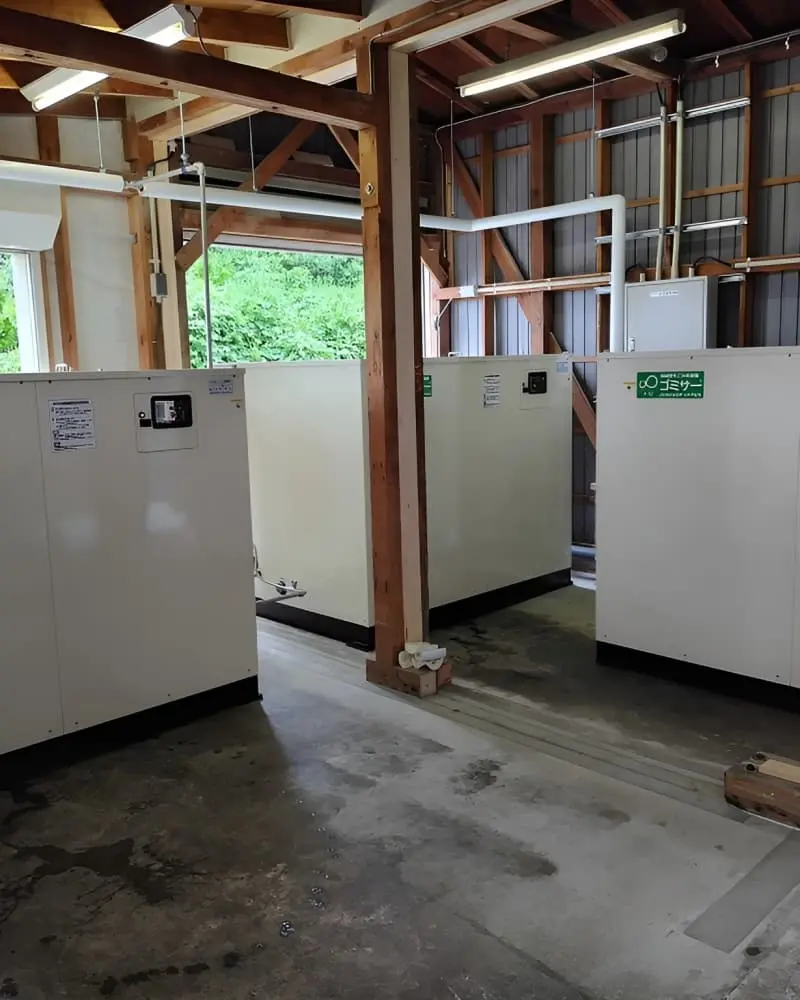


[Case Study] Ginza Sushi Restaurant: Food Waste Disposer GOMISER | AIC
CASE STUDY: RESTAURANTS & SUSHI BARS (GINZA, CHUO-KU, TOKYO)
Food Waste Turns into “Water" and Can Be Discharged Directly.
Reducing Total Waste by 50% for a More Hygienic and Smart Kitchen in Ginza
Installed Model: Commercial Food Waste Disposer GOMISER GH-10
Powerfully decomposes sea bream heads and bones, drastically improving the kitchen’s hygienic environment.
■ Challenges Before Installation: Concerns About Future Waste Disposal Crises and Hygiene Issues
Sushi Restaurant K, located in Ginza, Chuo-ku, Tokyo. Behind the installation was not only a store management issue, but also a strong sense of crisis regarding future environmental issues: “In 20 years, Tokyo might not be able to process its garbage." In addition to their high aspirations to reduce commercial waste as much as possible and maintain the processing system, they also faced hygiene challenges in daily store operations, such as “putrefaction, bad odors, and pest outbreaks caused by the moisture in food waste."
⚠️ Challenges at the Time
- Environmental Issues: Anticipating the risk of future waste processing inability, they wanted to reduce the actual volume of discharge.
- Hygiene: High-moisture food waste easily breeds bacteria, causing bad odors and pests.
- Storage Space: They wanted to reduce the space and effort required to temporarily store fish scraps after filleting.
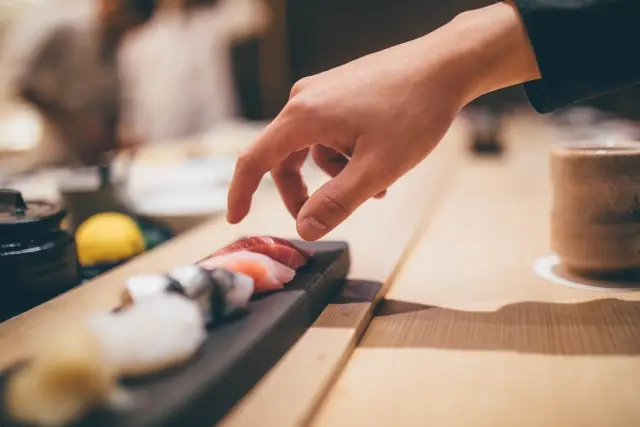
Site Characteristics:
For a sushi restaurant handling raw fish, preventing residue putrefaction and managing hygiene are top priorities.
*The image is for illustrative purposes only.
■ The Decisive Factor: Turning into “Water" to be Flushed Away, Not Compost
The biggest reason for choosing GOMISER among numerous food waste disposers was that “food waste turns into water and can be flushed down directly, instead of becoming compost."
In urban restaurants, it is common to struggle with the usage and storage space for the compost generated after processing. Because GOMISER uses the power of microorganisms to decompose and annihilate food waste into water and carbon dioxide, leaving almost no residue, its convenience of being processed as drainage was highly evaluated.
Why is it good that it turns into “water"?
The “annihilation-type" GOMISER decomposes and liquefies over 99% of the input food waste. Therefore, it requires absolutely no effort to remove processed materials or to transport and dispose of compost. It is the optimal method for urban restaurants with limited kitchen space.
▶ How the Annihilation-Type Food Waste Disposer “GOMISER" Works
■ Effects After Installation: Immediate Processing Without Storage. Powerfully Decomposes Sea Bream Heads and Bones
After installation, the total volume of waste discharged from the restaurant was reduced by more than half, and the financial burden of disposal steadily decreased.
What is particularly appreciated on-site is the speed of “being able to process filleted fish and other waste immediately without storing them." Since there is no need to accumulate garbage, the kitchen is always clean. Furthermore, its high decomposition capacity, which can process hard parts like sea bream heads and bones without any problems, has realized smooth operation without the hassle of sorting or crushing.
- ✅ Powerful Decomposition: Can powerfully process hard fish scraps like sea bream heads and bones.
- ✅ Operational Efficiency: Since waste can be input immediately after filleting, storage space is no longer needed.
- ✅ Cost Reduction: Total waste volume was reduced by more than half, lowering processing costs.
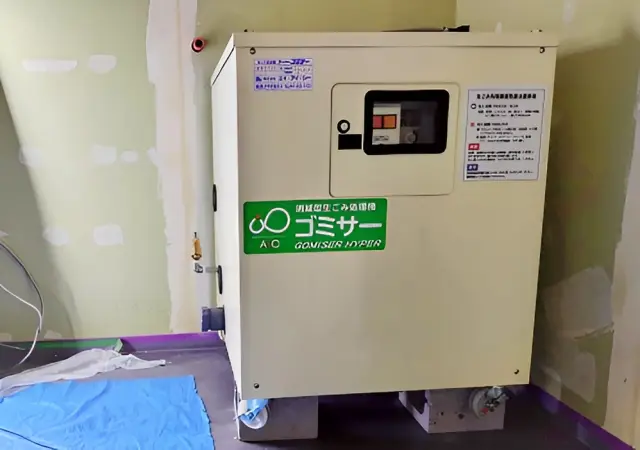
(Photo: The GH-10 model with a compact design that can be installed inside the kitchen)
■ AIC Comments: A Form of “Responsible Dining" Looking Toward the Future
The attitude of deciding to install while anticipating “future waste disposal issues," like Restaurant K, is an extremely important perspective in future restaurant management.
We are deeply honored to receive such powerful words that they “strongly desire" its installation in facilities that produce food waste. We will continue to support the balance of “emission reduction (reduce)" and “hygiene improvement" in urban stores.
Customer Voices & Q&A
Commercial Food Waste Disposer “GOMISER®" GH-10
An annihilation-type food waste disposer featuring a compact design that fits neatly into limited kitchen spaces. It powerfully decomposes even hard residues like sea bream heads and bones, turning them into water and carbon dioxide for direct drainage. It realizes a hygienic kitchen environment for urban restaurants without the hassle of compost disposal.
Free Consultation for Restaurant & Kitchen Managers
Professional Support to Improve Kitchen Hygiene
& Drastically Reduce Total Costs
Our experienced specialist staff will answer your questions for free, such as “How much cheaper will it be compared to our current waste collection fees?" or “Can it fit in our specific kitchen space?"
We also offer processing tests using actual residue and online site hearings.
Simulate the Installation Effects for Your Company for Free
Find out your "cost reduction" and "CO2 reduction" instantly based on your current data.