
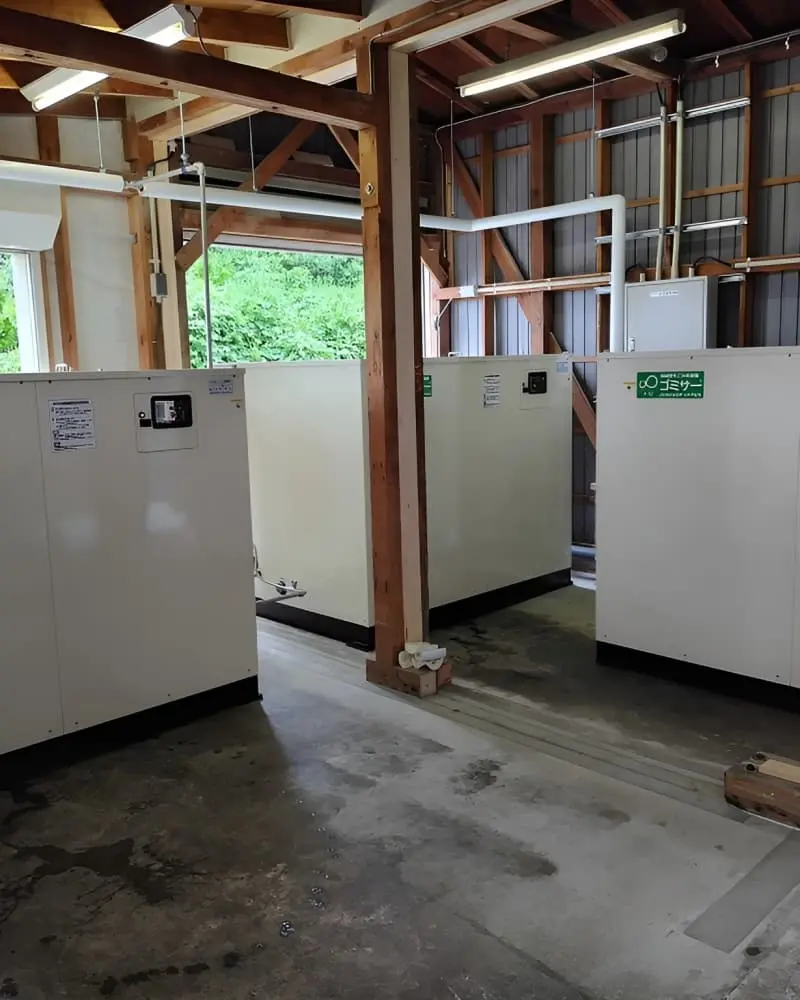


Grease Trap Odor Control Guide for Commercial Kitchens | Automated Solutions
SPECIALIST COLUMN
[For Restaurants & Kitchens] Grease Trap Odor Countermeasure Guide
~ Why Manual Cleaning Fails and How Automated Solutions Eradicate Odors & Effort ~
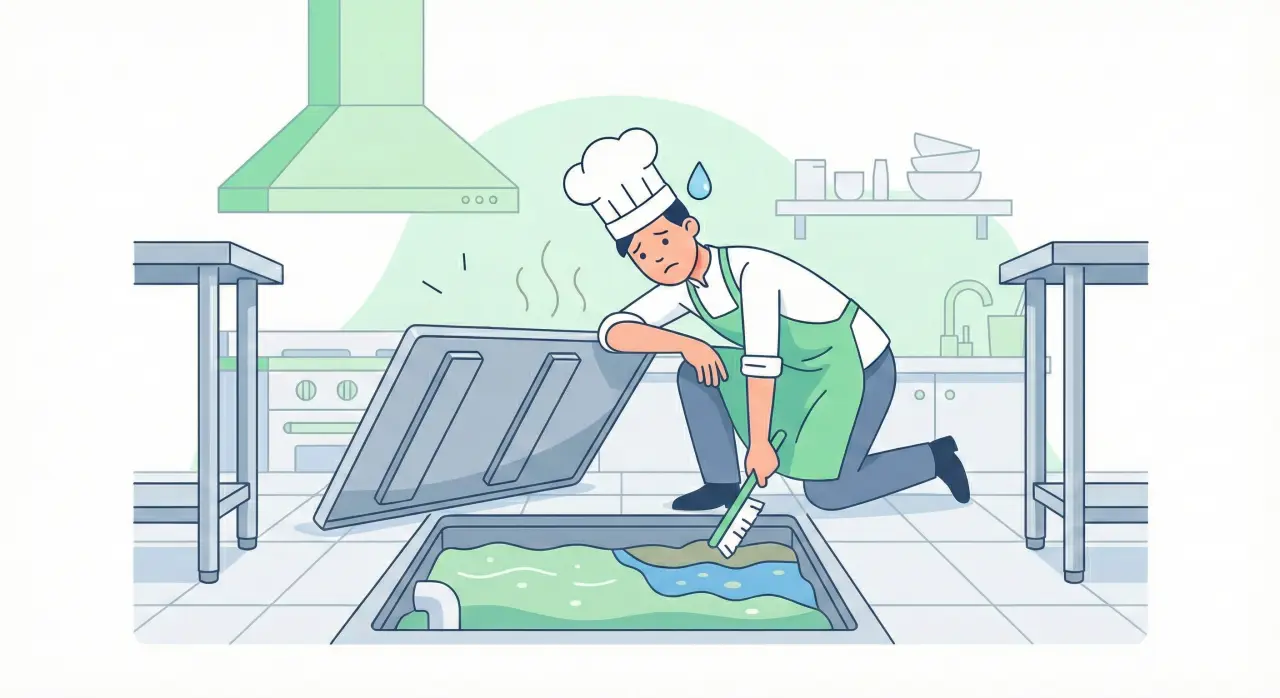
“Even with daily cleaning, bad odors linger immediately," “We can’t stop the infestation of drain flies and roaches"… In commercial kitchen management, struggles with grease traps (grease interceptors) are endless. The truth is, the root cause of these foul odors lies in “bacteria lurking in the pipes and walls" and “accumulated FOG (Fats, Oils, and Grease)" which can never be completely removed by surface cleaning alone.
Furthermore, the grueling and unsanitary task of cleaning grease traps is a major cause of high staff turnover in the food and beverage industry, driving away part-time and full-time employees alike.
In this article, AIC—providing frontline environmental improvement technologies since 2006—explains the mechanism of grease trap odors and the optimal solution that eliminates the cleaning burden, “prevents staff turnover, and achieves significant cost reductions."
Understand in 30 Seconds! Key Takeaways
- ✅ Root Cause of Odors: Abnormal proliferation of “anaerobic bacteria" feeding on unremovable FOG (Fats, Oils, and Grease).
- ✅ Limits of Manual Labor & Bio-enzymes: Imposes a harsh physical burden on staff (causing turnover), incurs ongoing costs, and yields inconsistent results depending on the kitchen environment.
- ✅ The Ultimate Solution: Fully automated decomposition via “Ozone Aeration." It eliminates the cleaning burden, improves staff retention, and drastically cuts expensive professional pumping fees.
1. Why Does It Smell? The Mechanism Behind Odors and Pests
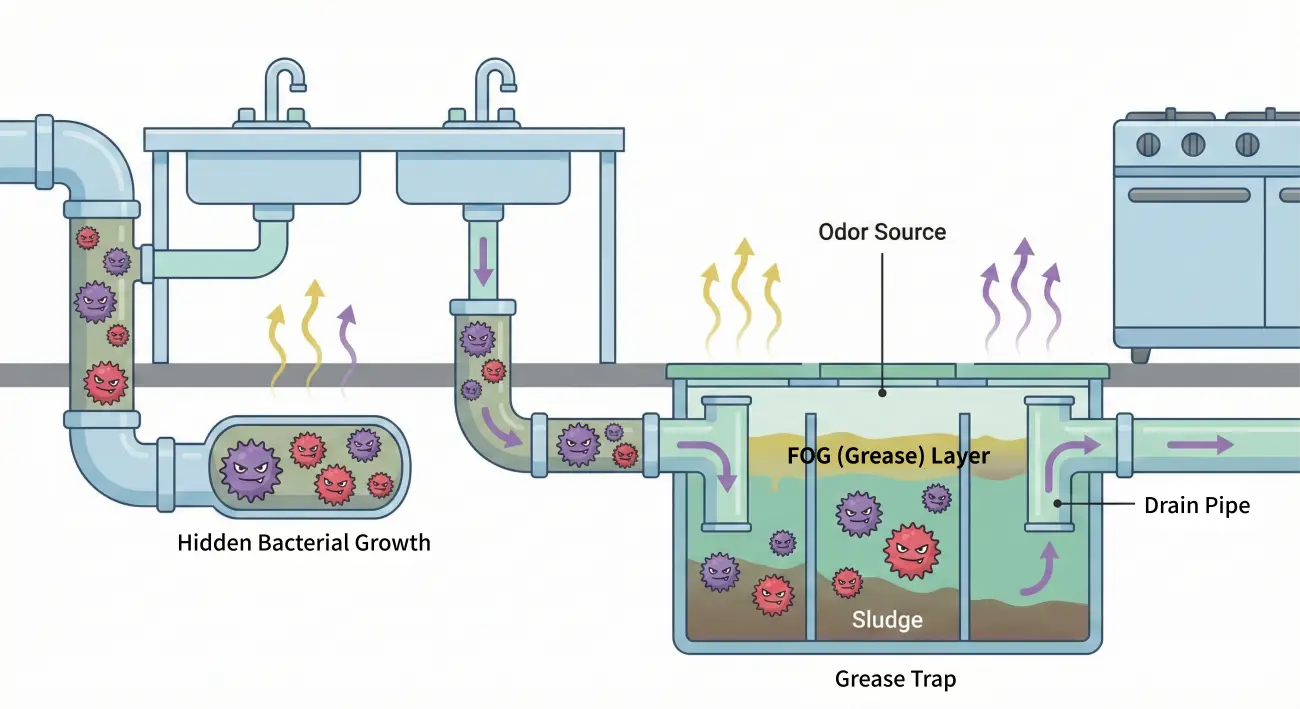
The bad smell from a grease trap is not just the smell of food waste itself. The real enemy is the “gas (such as hydrogen sulfide) produced when bacteria decompose the oil."
1. Abnormal Proliferation of Anaerobic Bacteria
Feeding on the floating FOG (scum) on the water surface and the sludge sinking to the bottom, miscellaneous bacteria (anaerobic bacteria) multiply explosively in areas where oxygen cannot reach. The “putrefaction gas (hydrogen sulfide, etc.)" generated when these bacteria decompose oil is the direct cause of the intense bad odor.
2. A Breeding Ground for Pests
Foul odors strongly attract pests. Furthermore, the stubborn FOG (scum) clinging to the walls becomes the perfect feeding and breeding ground for drain flies and cockroaches.
2. [At a Glance] Thorough Comparison of Grease Trap Solutions
We objectively compared the three mainstream countermeasures from the perspective of cost and labor.
| Comparison Item | Ozone Aeration (AIC Method) |
Bio-Enzymes (Chemicals/Microbes) |
Professional Pumping (Vacuum Services) |
|---|---|---|---|
| Root Odor Resolution | ◎ Sterilizes bacteria & breaks down FOG. 24/7 odor elimination. |
◯ Effectiveness fluctuates with water temp & harsh detergents. |
△ Good immediately after cleaning, but smells return in days. |
| Daily Effort (Cause of Turnover) |
◎ Fully automated. No skimming of floating FOG required. |
△ Requires regular manual input of chemicals and stirring. |
◎ Handled by pros, so there is no daily effort required. |
| Running Cost (Mid to Long Term) |
◎ Electricity only. Drastically reduces pumping fees. |
△ Requires continuous purchase of specialized bio-agents. |
× Expensive recurring expenses that continue forever. |
💡 Pro Insight: Can a system effectively pay for itself? (High ROI)
For example, outsourcing cleaning to a vacuum pumping service can cost a significant amount per visit. If you request it frequently as an odor countermeasure, the monthly expenses will drain your profits.
On the other hand, the Ozone Aeration System (AIC Grease Ozonizer) operates automatically to break down daily floating FOG, which can drastically reduce the frequency of expensive professional pumping interventions. In other words, rather than just being an expense, it has the immense benefit of directly leading to significant cost reductions and profit generation (High ROI).
3. The Ultimate Solution: “AIC Grease Ozonizer"
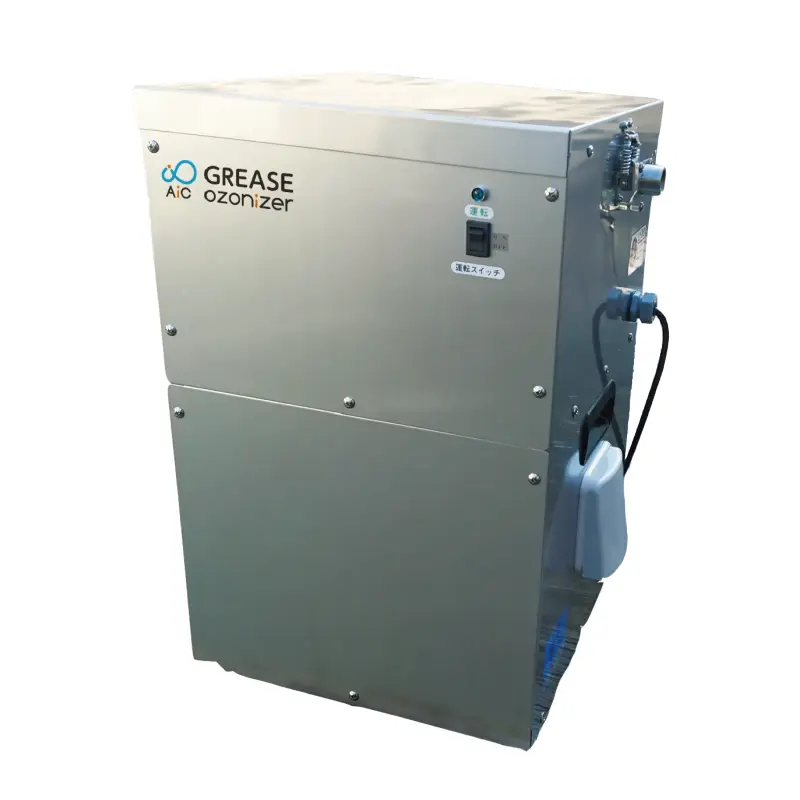
The most reliable method that reduces the staff’s burden to zero is the introduction of an “Ozone Aeration System." By injecting fine ozone bubbles directly into the grease trap, it performs “FOG decomposition (molecular breakdown)" and “powerful sterilization" simultaneously.
The Definitive Odor & Pest Solution
AIC Grease Ozonizer
With fully automatic timer operation, it dramatically reduces the daily “skimming of floating FOG" that plagues your staff, maintaining a clean kitchen environment free of drain flies and cockroaches. By reducing expensive vacuum pumping fees, it also greatly contributes to cost savings.
🎥 Check out actual operation videos on Instagram!
Have you given up, thinking “Grease traps are just naturally dirty"?
To deliver the surprise and realization of “Can ozone really make it this clean?", the official AIC Instagram releases many actual operation videos. Experience the overwhelming purification power that will change your common sense about cleaning through our videos.
Frequently Asked Questions (FAQ)
Manual cleaning can remove the debris in the basket and floating oil, but it cannot kill the “anaerobic bacteria" that are the true cause of the bad odor. If you introduce an ozone aeration system, fine ozone bubbles reach every corner, decomposing the remaining oil while destroying the bacteria at their source, thus preventing bad odors from occurring.
Because bio-enzymes are living organisms, they die when boiling water or strong commercial detergents flow in, resulting in the weakness of unstable effectiveness. On the other hand, ozone physically breaks down oil and destroys bacteria through chemical “oxidative decomposition," so it exhibits stable effectiveness regardless of the kitchen’s operational status.
Settling sludge still requires periodic extraction. However, because ozone decomposes the daily floating FOG, the frequency of professional pumping can be significantly reduced (e.g., from every month to once every six months). As a result, in many cases, the saved cleaning costs more than cover the monthly investment of the ozonizer.
Conclusion: A Kitchen Free from Odors and Harsh Labor
Cleaning grease traps is the most grueling and unsanitary task for staff, and it is actually said to be one of the major reasons why part-time and full-time employees quit.
“Automating" this task with ozone technology not only prevents complaints about bad odors and pests, but it also serves as a “profit-generating capital investment" to achieve significant cost reductions and prevent staff turnover, allowing them to focus on their primary duties (cooking and customer service).
Professionals will solve your kitchen odor troubles.
AIC Co., Ltd. will listen to the current status of your grease trap and propose the optimal equipment and operational methods. We also provide free simulations of cleaning cost reductions upon introduction, so please feel free to consult with us.
Article Supervision
As a specialist in environmental improvement equipment since 2006, we have provided products to restaurants, food factories, and medical institutions nationwide and globally. Continuing to face harsh on-site challenges, we propose only “truly effective solutions" based on empirical data.