
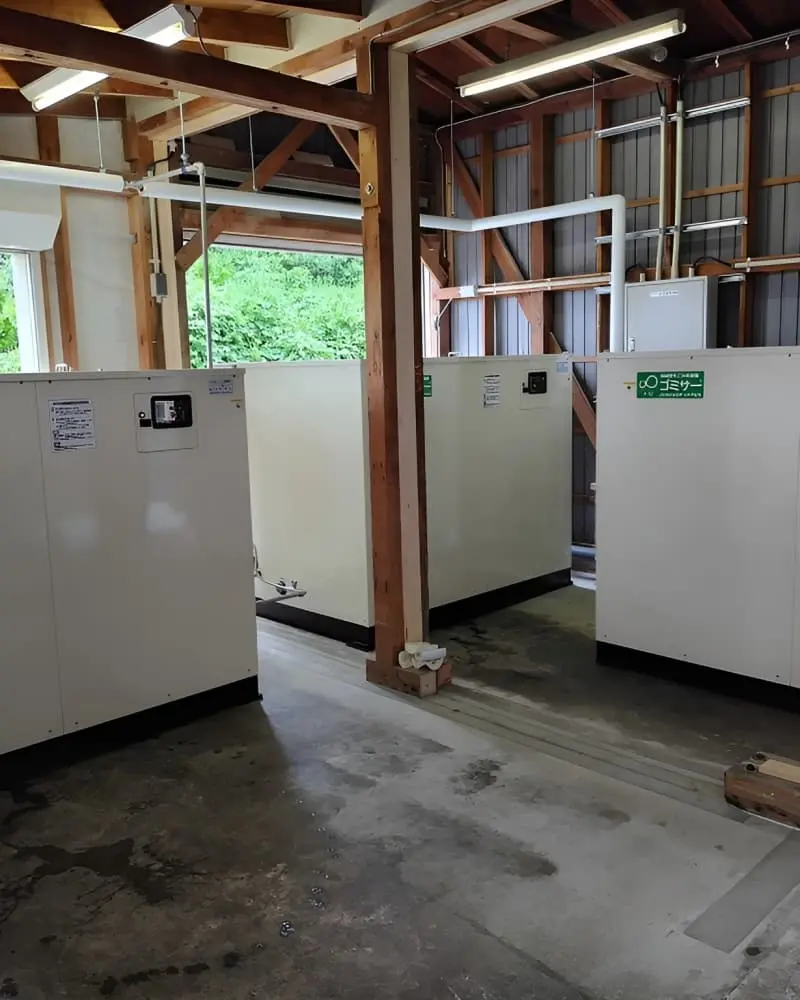


Mega Condominium Septic Tank Alternatives: Reduce Costs | GOMI SUPPORTER
FOR GLOBAL DEVELOPERS & ARCHITECTS
The Optimal Solution for Mega Condominium Waste Infrastructure:
Replacing Giant Septic Tanks
Proposing a Common Area Installation Scheme that Reduces
“Underground Disposer Tank" Costs by 90%
However, the “centralized disposer wastewater treatment systems" adopted in many projects
face massive challenges: exorbitant construction costs and future maintenance burdens on the management association.
This drastically compresses construction costs and protects property values after move-in,
while achieving strict environmental targets.
Structural Issues of Conventional “Disposer Septic Tanks"
01. Bloated Initial Costs
Excavating deep underground pits, burying massive septic tanks, and laying dedicated drain pipes from every unit. These construction costs, which can reach hundreds of thousands to millions of dollars, directly squeeze project profitability.
02. Surging Maintenance Costs
Statutory inspections, regular sludge extraction, and high-pressure cleaning of dedicated pipes. All of these drive up residents’ management fees, becoming a source of future delinquency risks and dissatisfaction.
03. Shortfall in Renewal Reserve Funds
The lifespan of these facilities is 15-20 years. Failing to secure the massive funds needed for renewal construction often causes management boards to break down over whether to abolish or continue the system.
Will Your Facility Plan Be Called a
“Negative Legacy" in 10 Years?
We must confront the “pressing concerns" of condominium management sites, which are evident in global search results.
Search: Disposer Maintenance Soaring
Due to rising industrial waste disposal costs, there are frequent cases where maintenance costs swell to more than double the estimate, damaging brand value post-sale.
Search: Ground Floor Apartment Odor
Putrid odors and hydrogen sulfide gas from underground treatment tanks. The impact of bad odors on lower-floor units directly leads to severe complaints after moving in.
Search: Tank Replacement Cost Millions
The enormous cost required for large-scale renovations. A breakdown in management operations due to a lack of reserve funds becomes a major hindrance when reselling.
[The Solution] Just Place GOMI SUPPORTER in the Garbage Room.
“Common Area Installation Scheme" Requiring No Treatment Tanks
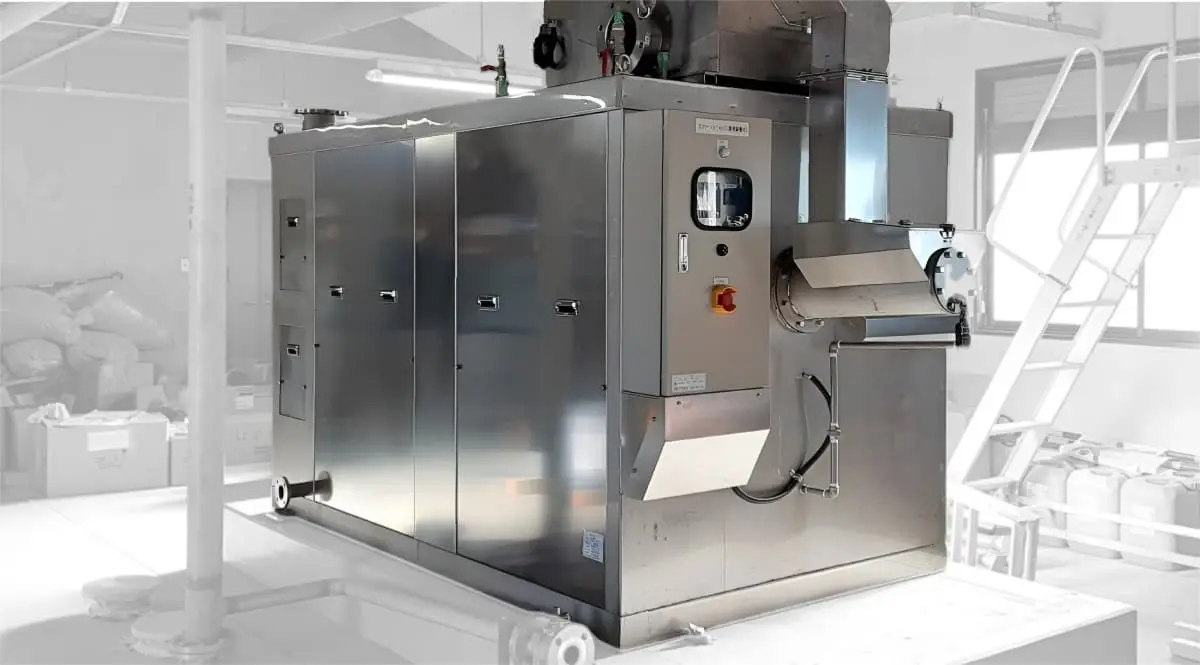
Instead of under each family’s sink, install the large-scale commercial extinction-type disposer “GOMI SUPPORTER" in the “garbage room" of the condominium’s common area. Residents can dispose of food waste 24 hours a day. The food waste is decomposed and eradicated on the spot, drastically reducing the amount of garbage handed over to collection trucks.
AIC Proposal Points
- Absolutely no excavation work required for underground pits (treatment tanks).
- No piping work required for exclusive areas (individual units).
- Reliably clears municipal guidance guidelines for waste reduction.
The Optimal Solution that Benefits Developers, Residents, and Government
| Comparison Item | Conventional: Septic Tank Method | AIC Proposal: Common Area Installation |
|---|---|---|
| Initial Investment | Hundreds of thousands of dollars | Only equipment costs (approx. 1/10 or less) |
| Incidental Works | Excavation, burial, dedicated piping for all units | Standard piping only (no civil engineering) |
| Running Costs | Sludge extraction, statutory inspections, high-pressure washing | Replenishment of microbe core and electricity only |
| Asset Value Maintenance | Risk of decline due to soaring management fees | Improved competitiveness through low management fees |
A Hidden Merit for Developers
Eliminate Underground Pits and Turn Them into “Profit-Generating Spaces"
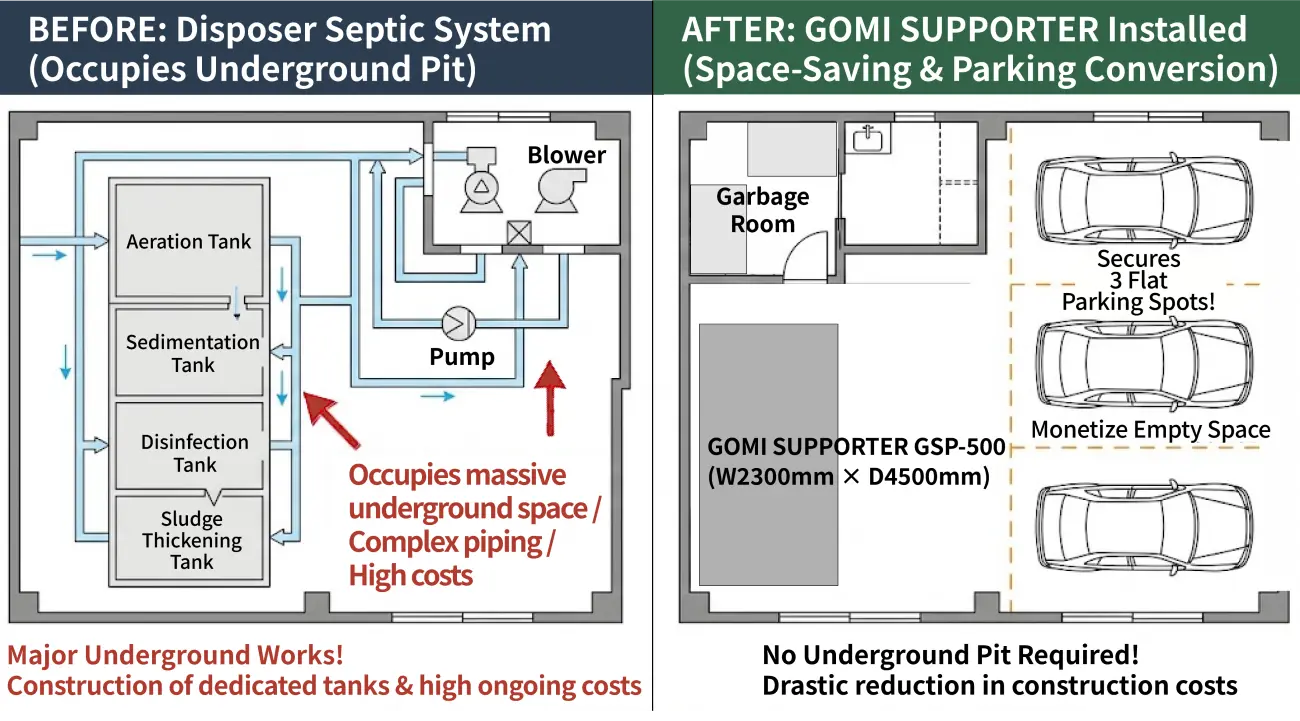
* Space comparison image when installing GOMI SUPPORTER
Installing a disposer septic tank (treatment tank) requires massive underground space.
By eliminating the need for a treatment tank with AIC’s scheme, that space can be repurposed into “Parking Lots," “Trunk Rooms," or “Bicycle Parking."
This not only reduces construction costs but directly improves profitability and convenience after the sale.
Maximizing Asset Value
- Shorten underground excavation period
- Increase number of parking spots (= increased revenue)
- Reduction of maintenance hatches
A Hidden Merit for Developers
Eliminate Underground Pits and Turn Them into “Profit-Generating Spaces"
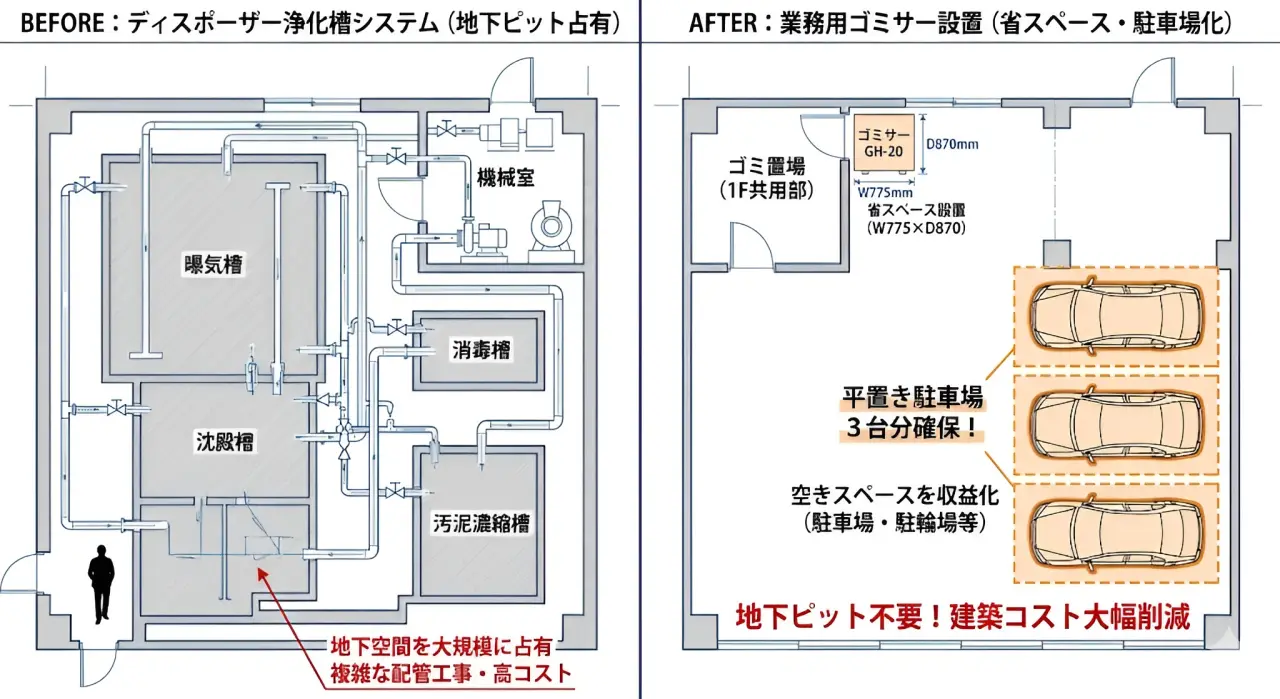
* Space comparison image when installing GOMI SUPPORTER
Disposer treatment tanks require massive underground space. With AIC, that space can be repurposed into “Parking Lots" etc., directly improving profitability.
Maximizing Asset Value
- Shorten underground excavation
- Increase parking spots
- Reduce maintenance hatches
By Project Scale
Recommended GOMI SUPPORTER Models & Capacity Guidelines
| Recommended Model | Target Number of Units | Processing Capacity |
|---|---|---|
| GSP-100 | 100 – 150 Units(Large Condominiums) | 100 kg / day |
| GSP-300 | 200 – 400 Units(Tower Mansions / Complexes) | 300 kg / day |
| GSP-500 | 500+ Units(Mega Condominiums) | 500 kg / day |
For mixed-use developments that include commercial facilities or mega projects, we can flexibly respond with multiple GOMI SUPPORTER installations up to 1000 kg/day. If you need detailed capacity calculations, please use our free simulation.
Astonishing Running Costs (GOMI SUPPORTER Estimate Example)
Here is a rough estimate of the monthly running costs for a typical large-scale system.
Compared to the massive maintenance costs of disposer treatment tanks, it achieves significant cost reductions.
Electricity
Water
Microbe Core
Total Monthly Impact
- * Actual costs will vary depending on operational settings and usage methods in your region.
- * GOMI SUPPORTER significantly lowers overall facility maintenance costs globally.
TRUST & LONGEVITY
A Track Record of “Trust" Operating for Over 10 Years
The most important aspect of commercial equipment is “durability."
We introduce actual cases where our systems have continued to support residents’ lives without major trouble for over 10 years since installation.
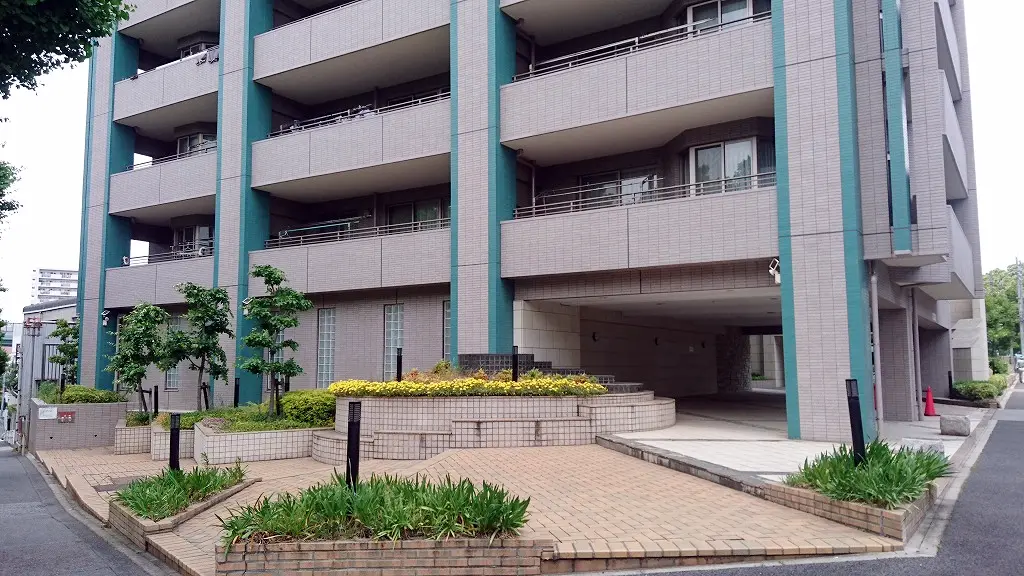
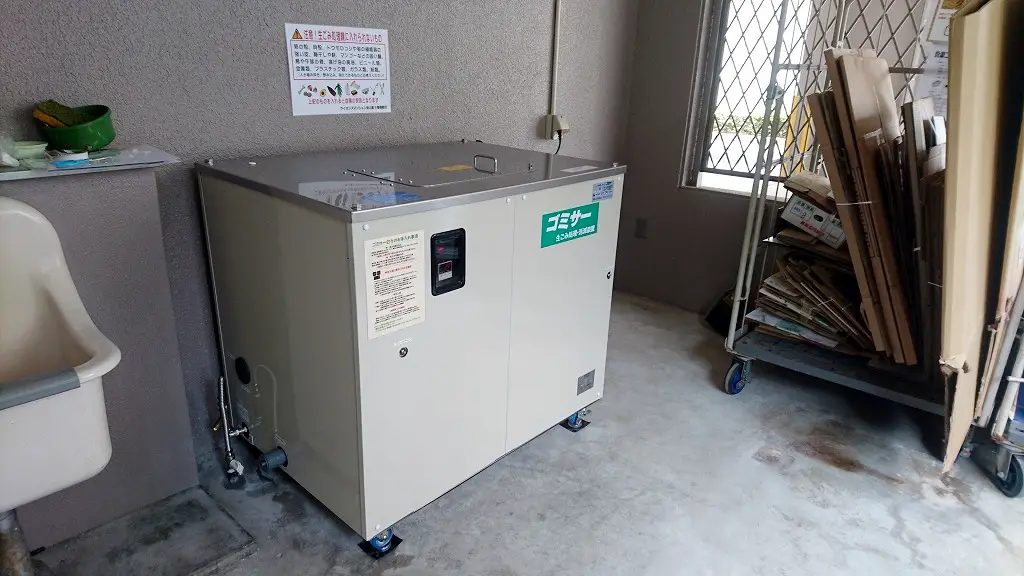
Condominium Installation Case A
Operation: Over 10 years (Ongoing)
Installed in a corner of the garbage room. Operating stably as part of daily cleaning management, it continues to eradicate food waste.
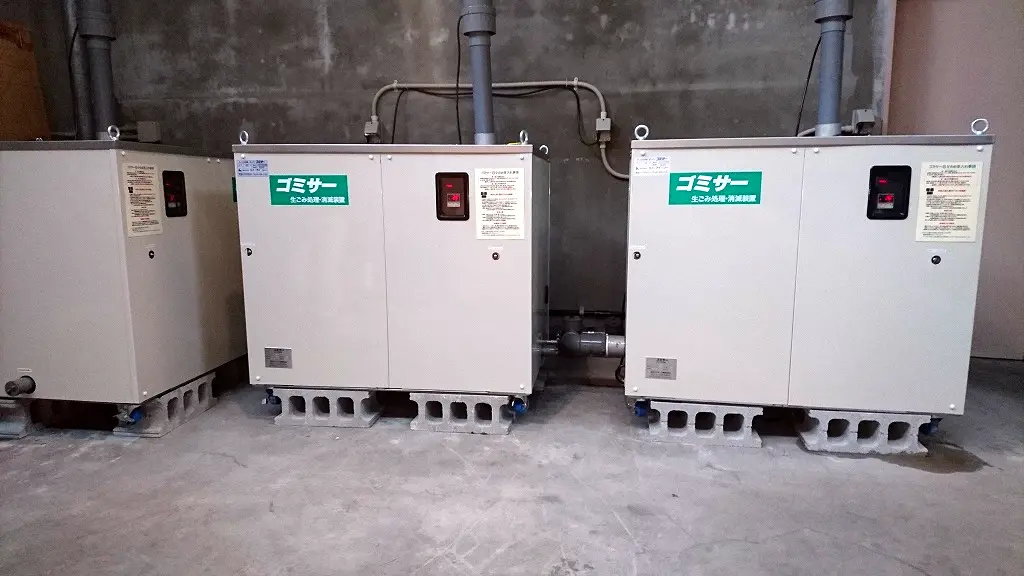
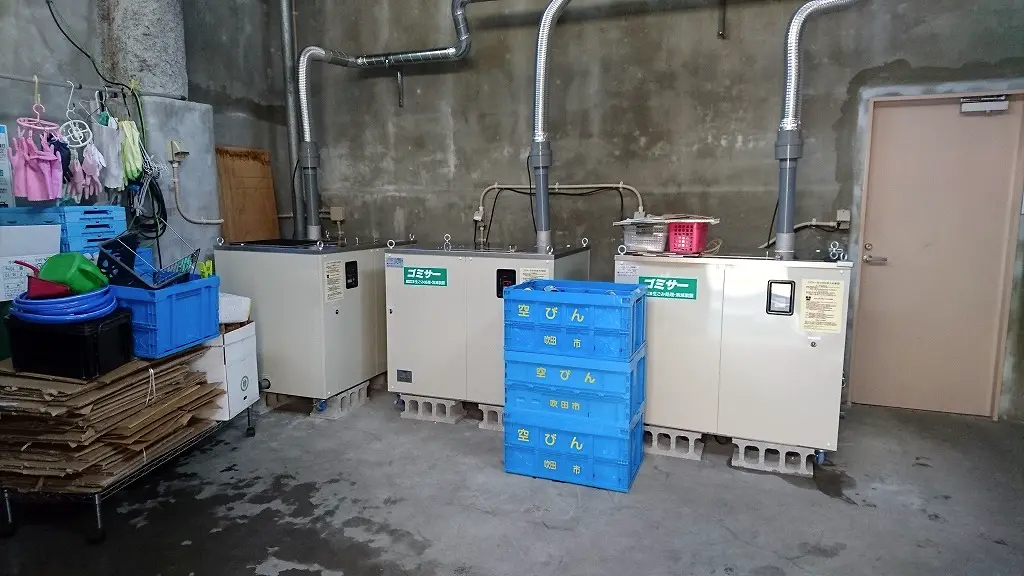
Condominium Installation Case B
Operation: Over 10 years (Ongoing)
Highly praised by residents for “no food waste odors." Has achieved low-cost management over a long period.
Average Continuous Operation: Over 10 Years
Frequently Asked Questions from Developers
The essential reason municipalities worldwide demand disposer equipment is to “reduce combustible waste." AIC’s GOMI SUPPORTER decomposes food waste into water and carbon dioxide, reducing residue to near zero, providing a reduction effect equal to or greater than disposers. In fact, it is accepted as an alternative facility to disposers by many strict environmental authorities.
In a normal garbage room, food waste continues to rot until collection day, but GOMI SUPPORTER begins decomposing “immediately after it is put in." Additionally, the inside of the device is always kept under negative pressure (drawing in air) and exhausted through a deodorizing catalyst, so no bad odors leak around the processing machine.
There is no work for the residents to do. We offer maintenance contracts where AIC or an affiliated contractor visits every few months to replenish the microbe core (decomposition material) and perform inspections. Because there is no “sludge extraction" or “water quality testing" like with septic tanks, the running cost is overwhelmingly cheaper.
For example, for a 100-unit condominium, construction costs for a disposer processing system (treatment tank, piping, installation in all units) starting at around $500,000 can be kept to under a fraction of that amount with GOMI SUPPORTER (common area installation), as it only involves equipment and basic installation costs. We will calculate the exact difference in a free simulation tailored to your project.
Large-Scale Commercial Extinction-Type Food Waste Disposer “GOMI SUPPORTER"
“Keep garbage rooms odor-free" and “Minimize management effort."
Chosen by many condominiums and mega commercial facilities globally.
Please see here for the detailed specs, durability, and decomposition mechanism of GOMI SUPPORTER.
Support for Compliance with Development Guidelines & Regulations
In areas worldwide where the installation of food waste processing facilities is recommended or mandated,
we can provide total introduction support, including consultation with administrative authorities.
We propose the optimal plan based on the latest guidelines in each region.
Free Simulation from the Design Stage
Based on your project drawings, we will confirm compliance with guidelines
and create comparative estimates for initial and running costs.