
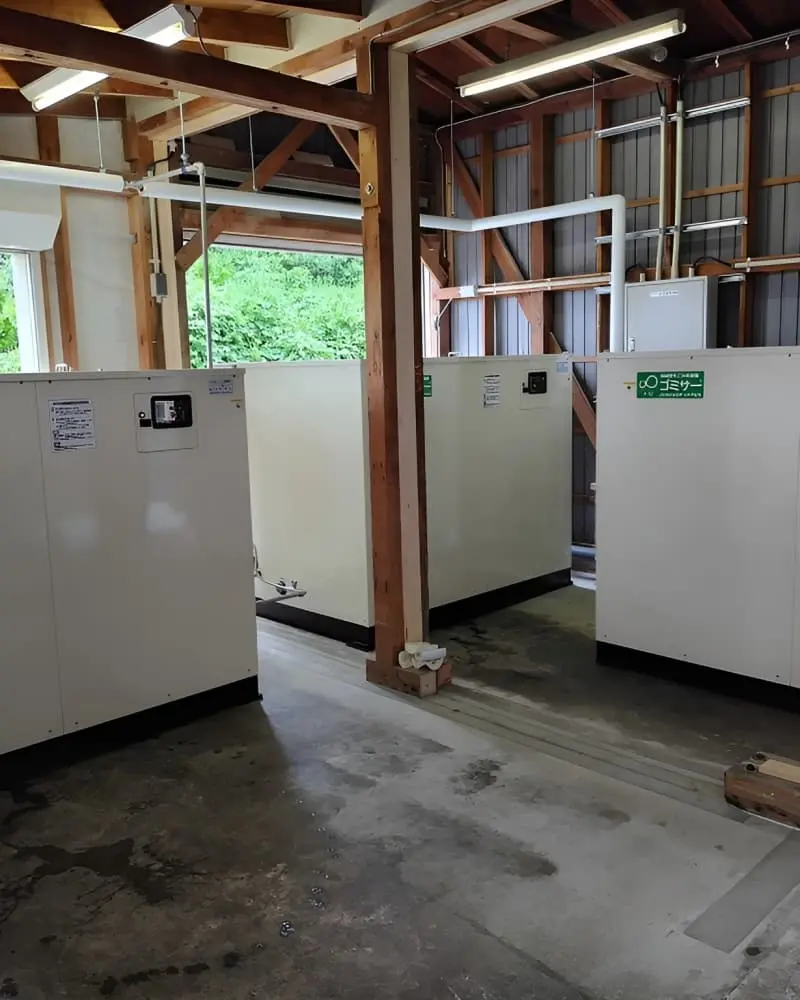


Company Cafeteria SDGs: Upgrading Old Food Waste Disposers | GOMISER
For Corporate Facilities, Factories, and Industrial Parks
[SDGs in Company Cafeterias]
Achieve “Ultimate Decarbonization" and Upgrade from Obsolete Food Waste Disposers
For many companies based in factories and industrial parks, the “company cafeteria" supporting employee health is an indispensable welfare benefit. However, processing the massive amounts of “food waste (prep scraps and leftovers)" generated daily is a major environmental challenge that companies face.
For companies that have exhausted standard eco-activities (SDGs initiatives) such as ISO certification, LED lighting installation, and going paperless, “in-house, zero-incineration processing of food waste" is currently drawing the most attention as the “ultimate trump card for SDGs and Decarbonization," bringing a massive positive impact to the organization.

Why is “Food Waste Processing" in Cafeterias the Trump Card for Corporate SDGs?
Many companies have declared their “SDGs commitment" and are working on energy conservation and recycling, but we often hear concerns like “We’ve run out of ideas for activities" or “We can’t think of the next step." The ultimate solution these companies arrive at is “improving waste processing in the company cafeteria."
🌎 Dramatic Reduction in CO2 Emissions
The vast majority of food waste is “water." The current system of transporting this water-heavy waste by truck and forcing it to burn (evaporating the water) in incinerators is a massive waste of energy and a cause of massive CO2 emissions. By processing this in-house (decomposing it into water), you can appeal it in environmental reports as a clear achievement of Zero Emissions (Decarbonization).
🤝 Employee-Participatory Eco-Activities
Sharing the fact in the cafeteria that “the meals and prep scraps we leave behind are being decomposed into water on the spot" serves as the best internal branding (internal enlightenment) to raise the environmental awareness of every single employee.
To Companies Struggling with “Obsolete Machines" from 20-30 Years Ago
Actually, in long-established companies in industrial parks, it is common to see that they were pioneers in environmental activities, quickly introducing equipment (composters or dehydrators) during the “food waste disposer boom" 20 to 30 years ago. However, today, cases where these “old machines" have become a major liability are rapidly increasing.
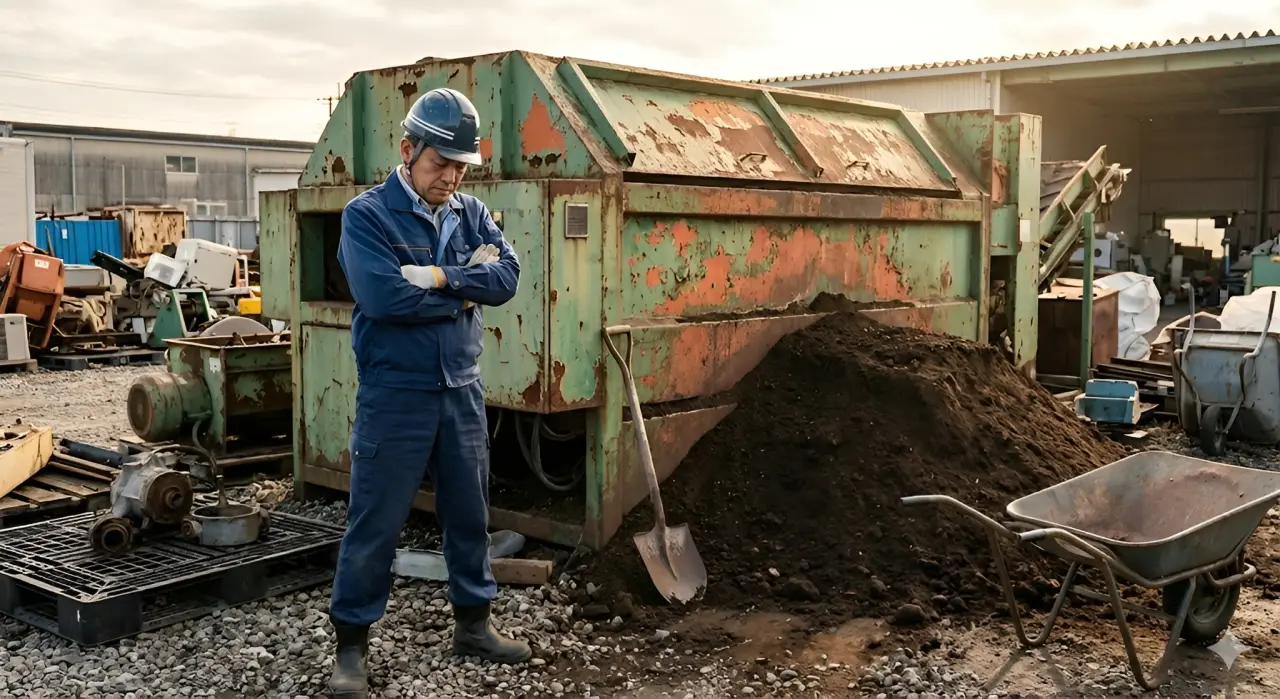
⚠️ “Maintenance Refugees" due to Manufacturer Bankruptcies & Withdrawals
Many manufacturers who entered the market during past booms have now withdrawn from the business or gone bankrupt. There is no end to cases where disposers have turned into giant iron boxes abandoned on factory grounds because “the machine broke down but there are no parts," or “we can’t contact the maker, so repair and maintenance are impossible."
⚠️ The Miscalculations of “Compost Disposal" and “Exorbitant Electricity Bills"
Old composter-type machines cause the absurd situation of “having no one to take the produced compost, and eventually paying money to dispose of it as industrial waste." Furthermore, drying-type (dehydrator) machines use heaters to forcefully evaporate water, resulting in abnormally high monthly electricity bills, squeezing corporate profits instead of reducing costs.
Why Companies Are Rushing to Replace Old Machines with the Extinction Type “GOMISER"
Companies that have experienced such “failures of past disposers" are increasingly choosing the extinction-type food waste disposer “GOMISER"—which has led the industry for over 32 years—as their partner for the next upgrade.
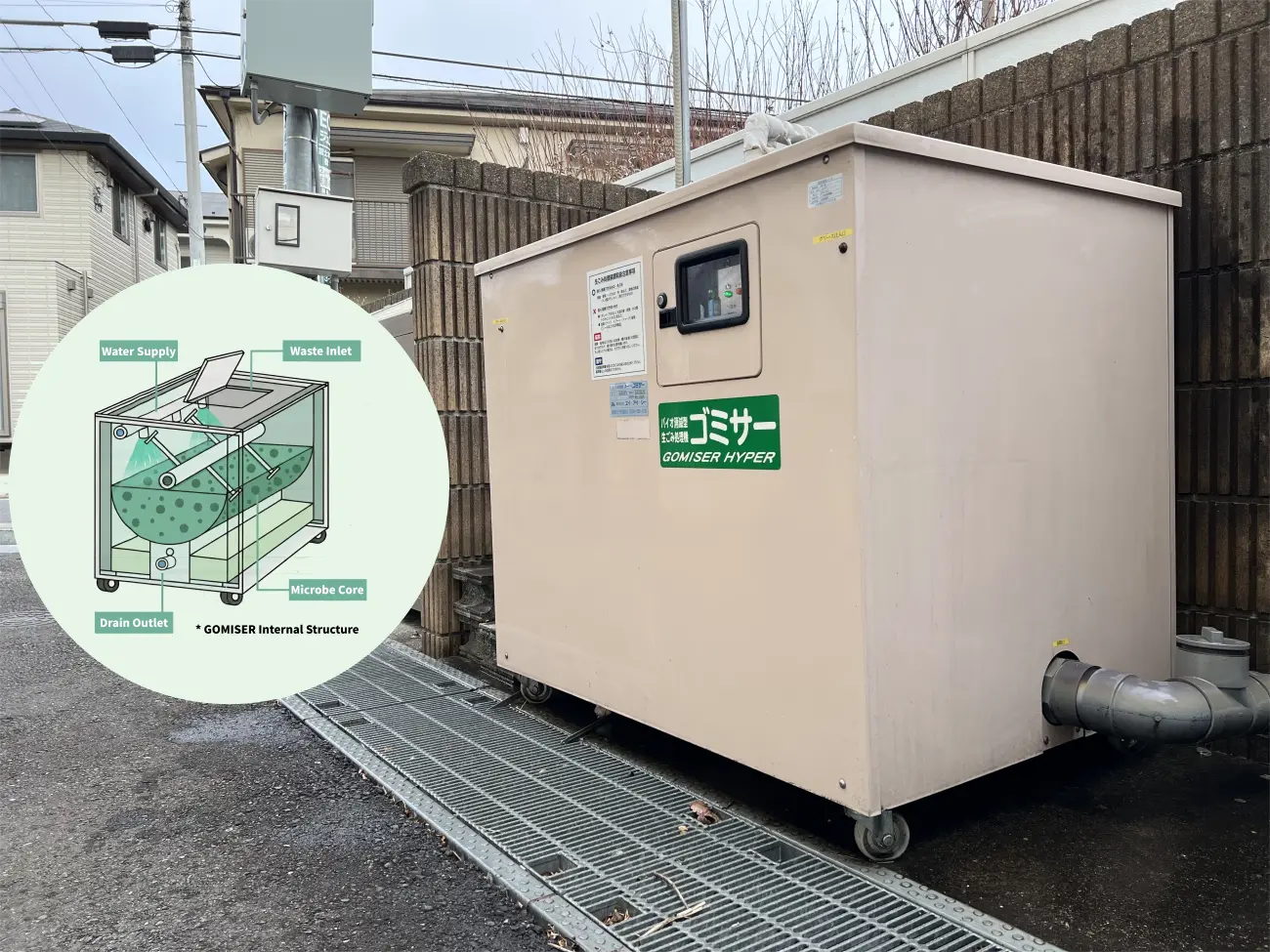
Reason 1: “Zero" Disposal of Generated Compost (Residue Removal)
GOMISER is a complete extinction type that decomposes 99.9% of food waste into “water and carbon dioxide." It entirely eliminates the heavy labor of removing compost (required by composters) and the need to request pick-ups from industrial waste contractors, dramatically reducing the operational burden on cafeteria staff.
Reason 2: “Overwhelming Durability & Support" Proven by Over 32 Years of History
What dispels the anxiety of “What if the manufacturer disappears again?" is a track record of over 1,000 installations and a rock-solid support system cultivated over many years. Because it does not have complex mechanisms, the risk of failure is extremely low, and there are many sites where it has been operating for over 15 years without parts replacement.
Reason 3: Massive Electricity Cuts & Utilization of Subsidies
Because it utilizes the decomposition heat of microorganisms, it does not use massive amounts of electricity (heaters) like drying-type machines. Furthermore, since it involves upgrading to the latest energy-saving equipment, there is a high possibility of securing funding very favorably as a target for national or municipal “Energy-Saving Subsidies" and “Manufacturing Grants."
Frequently Asked Questions (FAQ) Regarding Cafeteria Upgrades
We handle everything from dismantling, removal, and disposal of your existing old machine as a set with the introduction of the new machine (GOMISER). Even in cases where “there are no blueprints" or “we cannot contact the manufacturer," we will confirm the removal route through an on-site survey and propose a safe replacement plan.
If you tell us “the amount of waste currently being incinerated" and your “electricity bill," we will calculate the CO2 emissions that can be reduced by introducing GOMISER and the improved recycling rate, creating free data that can be used exactly as is for approval documents and environmental reports.
Food waste disposers are often targeted by “Energy-Saving Investment Promotion Support Projects" and “Manufacturing Grants." We have extensive experience in supporting subsidy applications, so please feel free to consult us for everything from researching applicable subsidies to supporting the creation of necessary application documents.
[Summary] Why Cafeteria Food Waste Processing is the “Ultimate SDGs Action"
“In-house food waste processing" in company cafeterias at factories and industrial parks is an essential environmental measure for modern companies. The key points of this article are as follows:
- 🌎 By not incinerating food waste, you achieve a “massive reduction in CO2 (Decarbonization)" and can appeal it as a clear SDGs activity.
- ⚠️ Old “Composter / Dehydrator" machines carry the risk of becoming maintenance refugees due to manufacturer bankruptcies and high maintenance costs.
- ✨ By upgrading to the zero-residue “Extinction Type (GOMISER)," you can dramatically cut operational burdens and costs.
For Corporate SDGs & Equipment Upgrades:
Try Our “Free Online Diagnosis"
Our specialized staff will answer your concerns for free, such as “We want to do something about the broken old machine left on site" or “We need a concrete simulation for our SDGs activities."
We can also prepare cost comparison tables against your current industrial waste and electricity expenses.