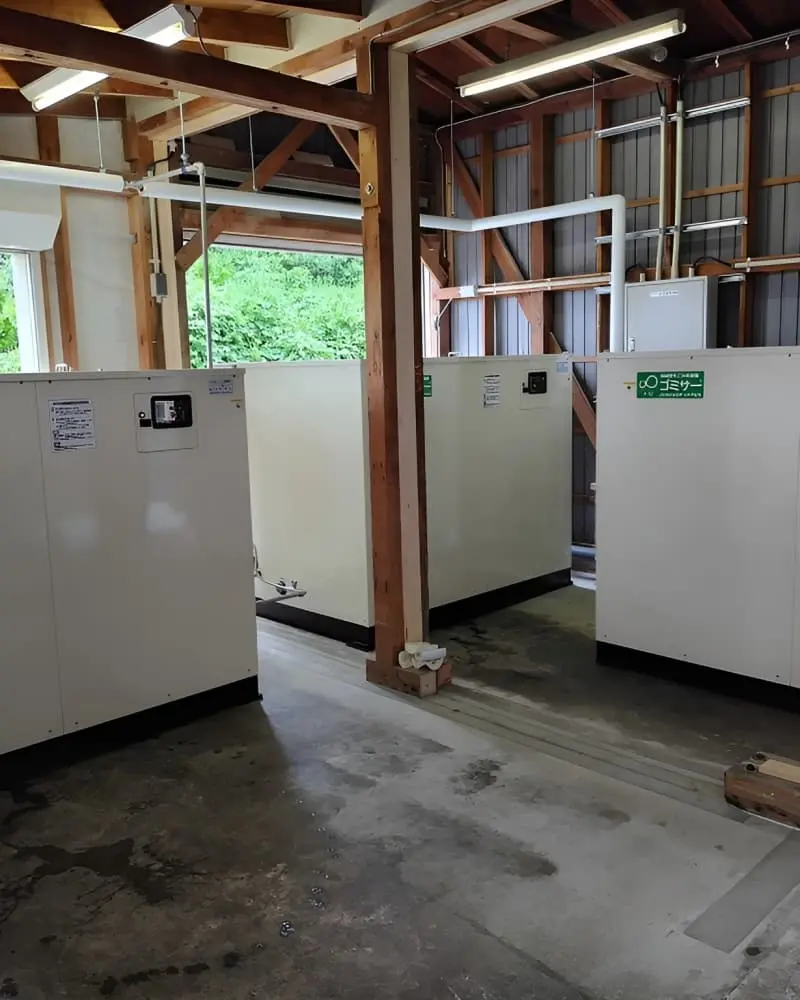


[Case Study] Hospital Disposer Replacement to GOMISER | AIC
CASE STUDY: HOSPITALS & MEDICAL INSTITUTIONS (REPLACEMENT FROM COMPETITOR’S MACHINE)
Breaking Free from “Frequent Malfunctions" of Competitor Disposers!
Returning to “GOMISER" for Its Failure-Free Track Record and Swift Local Support
Installed Company: Eisei Hospital (Hachioji City, Tokyo)
Installed Model: Commercial Food Waste Disposer GOMISER GH-100 x 3 units
Reduced hospital food waste without stress thanks to swift maintenance support locally in Hachioji and the overwhelming peace of mind that the equipment does not break down.
Realized efficient and hygienic operations by assigning 3 disposers separately for breakfast, lunch, and dinner.
■ Challenges Before Installation: The “Hidden Maintenance Costs" and Frequent Malfunctions of the Competitor’s Disposer
Eisei Hospital had used GOMISER in the past, but considered replacing the equipment during facility construction. At that time, they were attracted by the “low initial price of the main unit" and installed an annihilation-type food waste disposer from another company.
However, over the approximately 10 years of using that competitor’s disposer, in addition to the originally expensive regular maintenance fees, repair costs due to frequent malfunctions accumulated. As a result, they suffered from the problem that “the actual cost ends up being higher than if we had continued using GOMISER." In a site like a hospital where a massive amount of meals are provided, having the disposer stop is fatal, and “reviewing the total cost and finding equipment that can truly be used with peace of mind" became an urgent task.
- Hidden Maintenance Costs: The initial cost was low, but the total cost increased due to expensive regular maintenance fees and repeated repair costs.
- Malfunctions of Competitor’s Machine: The installed annihilation-type disposer from the competitor frequently broke down, resulting in unstable operation.
- Anxiety About the Support System: Worry about whether they would respond immediately in the unlikely event of a breakdown.
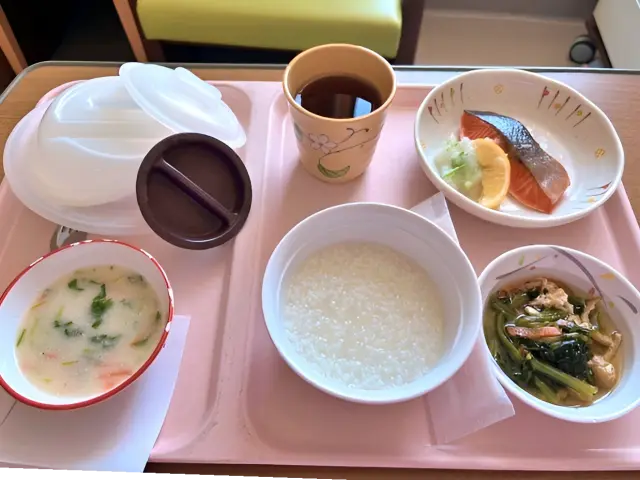
Site Characteristics:
Hospital meals contain a lot of moisture and starch, like rice and rice porridge. While competitor machines often have restrictions like “rice types up to 30% of input volume," exceeding which tends to cause trouble or breakdowns, GOMISER can safely process them all at once without restrictions. It strongly supports the “stability" of medical settings where processing absolutely cannot be stopped.
*The image is for illustrative purposes only.
■ The Decisive Factor: Low Total Cost and “Reliable Maintenance" Unique to a Local Company
Triggered by the breakdown of the competitor’s machine, they considered replacing the equipment again. At that time, what they re-evaluated was the “overwhelmingly low number of breakdowns with GOMISER" from when they used it in the past.
As a result of comparing not just the superficial price of the main unit, but the “total cost including regular maintenance fees and repair costs when operated over a long period," they judged that GOMISER was, after all, practically cheaper and more economical. Furthermore, because AIC is a local company in Hachioji, just like Eisei Hospital, the sense of security that “even in the unlikely event of an emergency, maintenance response will not take time" was also a decisive factor, leading them to choose GOMISER once again.
■ Effects After Installation: Efficient Operation with a 3-Unit System for Breakfast, Lunch, and Dinner! Comfortable with Zero Breakdowns and Low Odor
In this replacement, they installed three “GH-100" units, each with a processing capacity of 100kg per day, and built an extremely efficient system with low operational load by inputting waste into separate disposers for each meal: 'breakfast, lunch, and dinner.’
After installation, “equipment breakdowns," which they had suffered from with the previous competitor’s machine, have not occurred at all, and they are highly satisfied because there is little odor during processing. In addition, by subscribing to the monthly maintenance service (optional), they are able to always use it with peace of mind in its best condition.
- ✅ Overwhelming Durability: After replacing the competitor’s machine, equipment breakdowns and malfunctions dropped to zero.
- ✅ Distributed Operation for Meals: Efficient processing with a 3-unit system also reduces the load on the equipment.
- ✅ Reliable Support: Realized stable operation with swift local response and regular maintenance.
Rather than concentrating massive amounts of food waste into one unit, distributing it across three units (for breakfast, lunch, and dinner) enables even more stable annihilation processing.
■ AIC Comments
A commercial food waste disposer is by no means cheap equipment. That is precisely why the biggest focus is “can it be used with peace of mind while keeping running costs down until the end of its lifespan?" There are clear reasons why GOMISER is overwhelmingly chosen, especially by hospitals and medical institutions.
[Reasons Why GOMISER is Chosen by Hospitals & Medical Institutions]
- ✓
The Overwhelming Durability of “Not Breaking Down" and a Reliable Support System:
We often receive consultations from customers who installed annihilation-type disposers from other companies, saying “there are many malfunctions" or “repair response is slow." Because GOMISER does not have complex mechanisms, the risk of breakdown is extremely low, and it is not rare for customers to specifically request it, saying, “After all, we want to return to GOMISER," just like Eisei Hospital in this case. They also highly evaluate our support system, which allows us to rush over swiftly in the unlikely event of an emergency. - ✓
Overwhelming Adaptability to Rice and Rice Porridge (Starches):
“Large amounts of rice and rice porridge" typical of hospital meals tend to cause poor decomposition or input restrictions (such as up to 30%) in other companies’ machines like liquid decomposition types. However, GOMISER, with its strong microbial power, can process them all at once without restrictions. - ✓
Breaking Free from Unexpected Running Costs and Expensive Upkeep Fees:
We receive a very large number of consultations about switching from competitor products, stating, “We installed another company’s disposer, but we are in trouble because upkeep costs, such as repair fees due to malfunctions and expensive maintenance contracts, are too high." Because of its simple structure, GOMISER has low upkeep costs, making it possible to significantly reduce total costs.
For sites troubled by the malfunctions and expensive maintenance fees of competitor’s disposers, like Eisei Hospital, replacing them with “GOMISER (annihilation type)"—which has a simple structure and an extremely low risk of breakdown—is the most reliable solution to the problem. When considering replacing old disposers or competitor products chosen for their low initial costs, or when seeking practical cost reduction, please consult with our company, which has an abundant track record.
Customer Voices & Q&A
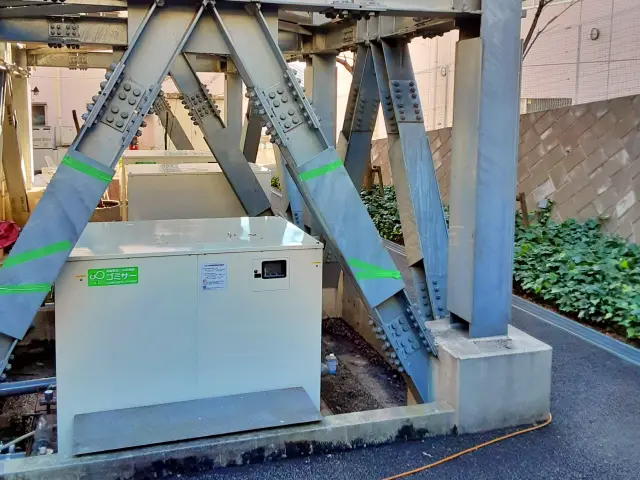
Commercial Food Waste Disposer “GOMISER®" GH-100 (3 Units)
By installing three large models, each with a daily capacity of 100 kg, operations are distributed across breakfast, lunch, and dinner. It completely prevents decomposition failures and breakdowns often caused by starchy hospital foods (such as rice and porridge), creating a fail-safe waste processing infrastructure essential for healthcare facilities.
Free Consultation for Hospitals, Clinics & Care Facilities
Professional Support to Improve Kitchen Hygiene
& Drastically Reduce Total Costs
Our experienced specialist staff will answer your questions for free, such as “How much can we reduce upkeep costs by replacing competitor machines?" or “Can it seamlessly handle high-moisture hospital meals?"
We also offer preliminary processing tests and online site hearings.
Simulate the Installation Effects for Your Company for Free
Find out your "cost reduction" and "CO2 reduction" instantly based on your current data.