


Commercial Food Waste Grinder Regulations & Legal Alternatives | GOMISER
For Restaurant Owners & Facility Designers
Why “Commercial Food Waste Grinders" Are Failing Globally:
Sewer Regulations & The Truth About Equipment Selection
When opening a new business or designing a commercial kitchen, many consider installing a “Commercial Food Waste Grinder (Disposer)," thinking, “It would be so easy if we could just grind food waste in the sink and flush it away." However, when they actually try to introduce it, most are forced to give up, facing the high walls of local municipal ordinances and strict sewer regulations.
The truth is, in many cities around the world, the act of grinding food waste and flushing it directly into the sewer is strictly regulated or banned in principle, as it causes massive environmental loads and pipe blockages (FOG buildup).
In this article, we explain the decisive differences between often-confused “Grinders" and “Commercial Food Waste Disposers (Extinction Type)," and the only solution to achieve a comfortable kitchen environment while clearing strict legal regulations.
“Grinders" and “Extinction Type Disposers" Are Completely Different
While both are “machines that process food waste," their mechanisms and “where the waste goes" are exact opposites.
⚠️ Grinders (Macerators)
“Crush into small pieces and flush into the sewer"
- Mechanism: Physically crushes food waste under the sink and flushes it down the drain pipe with water.
- Risk: Extreme load on sewer pipes and treatment plants. It combines with oils in the pipes, causing severe blockages.
- Legal Status: Standalone installation is banned in many municipalities worldwide.
✨ Food Waste Disposer (Extinction Type)
“Decompose with microbes and eradicate"
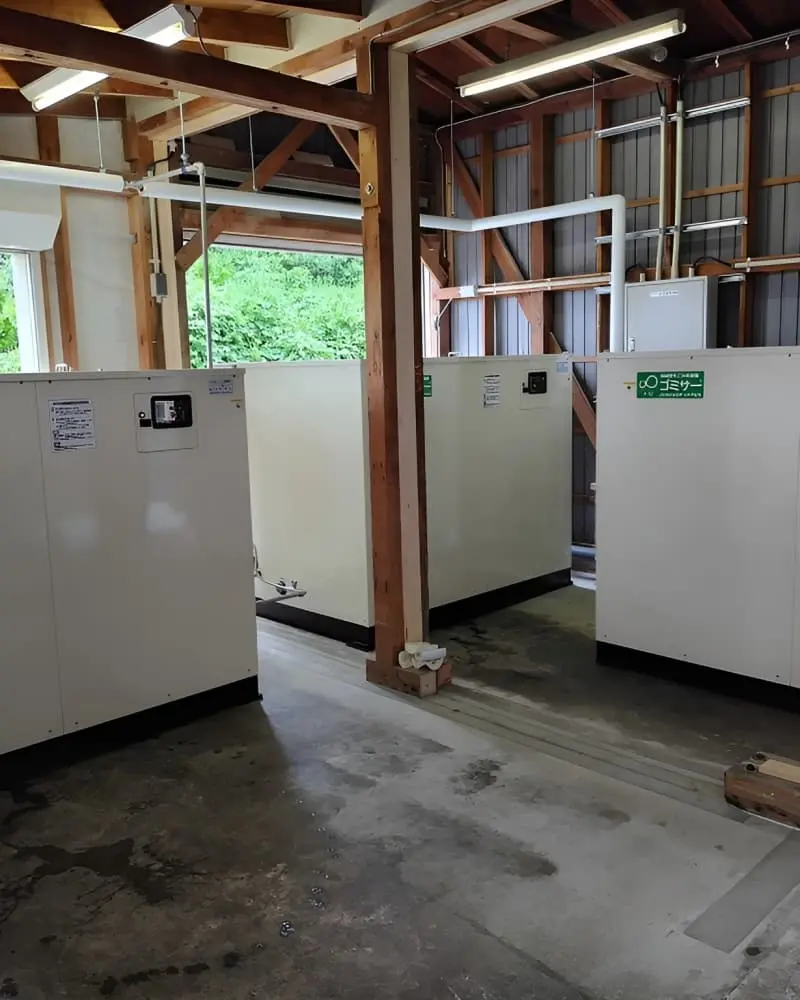
- Mechanism: Microbes decompose the waste inside the processing tank, converting it into water and carbon dioxide.
- Merit: Does not flush solids into the wastewater. No environmental load, and does not damage pipes.
- Legal Status: Legal and recommended; eligible for subsidies in many regions.
Why are “Standalone Grinders" Banned Globally?
Municipal sewer systems are designed to treat industrial and domestic wastewater (toilets/baths), and are not designed to handle massive influxes of organic food waste.
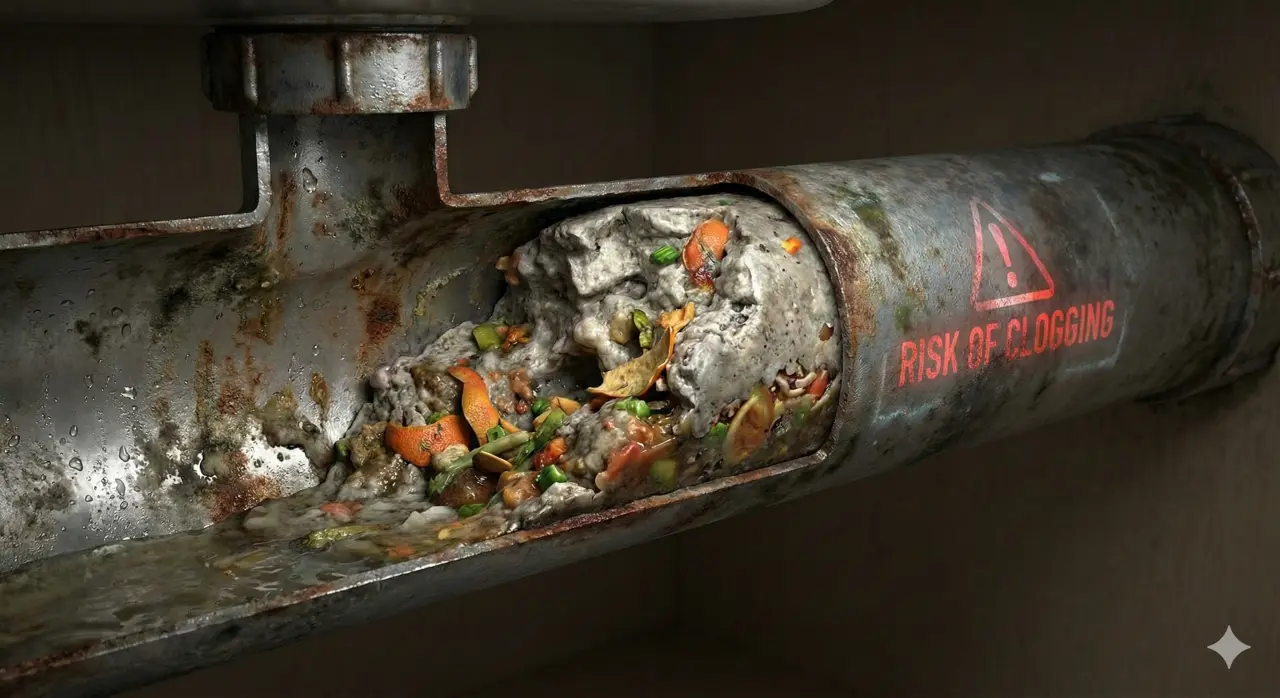
Pipe Clogging & Blockage
Crushed food waste combines with FOG (Fats, Oils, and Grease) in the pipes, cools, and hardens like concrete (Fatbergs). This is the main cause of frequent drain blockages and backflow accidents.
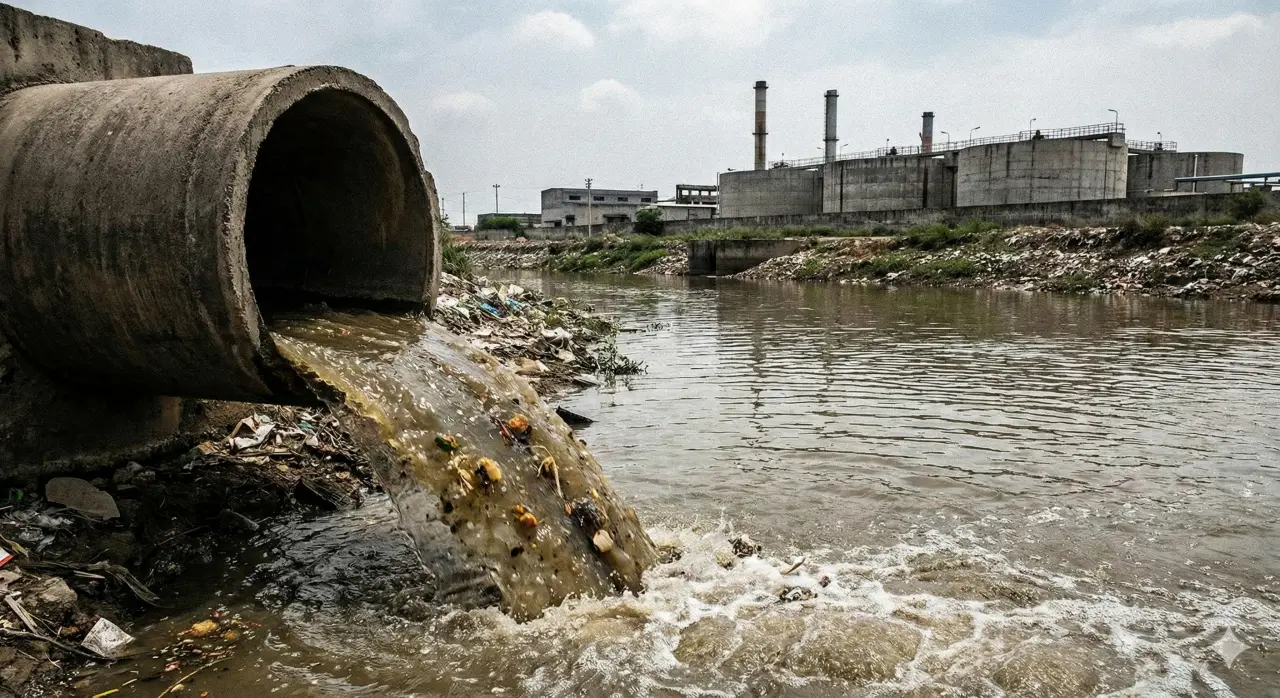
Overload on Treatment Plants
It exceeds the purification capacity of sewage treatment plants, causing water pollution (high BOD/TSS levels). Therefore, municipalities clearly stipulate “bans on the use of standalone grinders" in their ordinances.
The “System with Treatment Tank" Exception is Exorbitantly Expensive
The only way to legally use a grinder in many strict jurisdictions is to introduce a “Grinder Wastewater Treatment System" (equipment that temporarily stores crushed waste in a massive underground grease interceptor/tank, purifies it, and then discharges it). However, this requires massive initial costs (tens of thousands of dollars), vast installation space, and exorbitant regular sludge extraction costs, making it unrealistic for typical restaurants and facilities.
[Thorough Comparison] Grinders vs. Extinction Type (GOMISER)
If your goal is to “reduce labor" and “maintain hygiene," the “Extinction Type" is the optimal solution, carrying zero legal risks and offering low running costs.
| Comparison Item | Standalone Grinder (Crush & Flush) |
Extinction Disposer (GOMISER) |
|---|---|---|
| Mechanism | Crushes and flushes into sewer | Decomposes into water and air |
| Regulations & Surcharges | Banned in Principle (High risk of severe BOD/TSS fines) |
No Legal Issues (Eco-friendly & Compliant) |
| Pipe Troubles | High risk of clogging/backflow | Zero risk as solids are not flushed |
| Grease Trap Impact | Sludge explodes; cleaning costs soar | No added load; actually reduces grime |
| Initial Cost | Unit is cheap, but legal tanks cost tens of thousands of dollars | Equipment cost only (Fixed monthly rate with lease) |
Conclusion: For Commercial Use, the “Extinction Type" is the Safest and Most Economical
AIC’s extinction-type food waste disposer “GOMISER" carries absolutely no legal worries or pipe-clogging risks like a grinder does.
It can be installed right next to the sink; simply toss in food waste as it’s generated.
Cases are rapidly increasing where customers initially considering a grinder ultimately choose GOMISER to avoid regulatory fines and massive infrastructure costs.
Frequently Asked Questions About Grinder Installation
Household grinders lack the capacity to process commercial fats and large amounts of food scraps. If introduced, the pipes will quickly block (rupture), causing catastrophic sewage backflow onto your floors. Furthermore, municipal regulations strictly prohibit the installation of standalone grinders in commercial facilities, making you subject to severe fines and corrective recommendations.
Systems with treatment tanks incur massive installation construction costs, plus perpetual, expensive maintenance costs mandated by law, such as “sludge extraction" and “water quality testing." GOMISER requires electricity, water, and the replenishment of its “microbe core (decomposition accelerator)," but unlike other bio-types that require full replacement, it only needs “replenishment a few times a year," keeping running costs to an absolute minimum.
With grinders, flushing fibrous vegetables (like corn husks or green onions) and eggshells is a major cause of pipe blockages and breakdowns. While GOMISER also cannot process “large bones or shells," it powerfully decomposes the fibrous materials and large amounts of carbohydrates (rice, noodles) that grinders struggle with. You can process daily vegetable scraps without worry, eliminating the risk of equipment failure.
We can coordinate the removal of your existing grinder and the restoration of your sink drain to a normal basket-equipped drain. By combining this with pipe cleaning, you can completely eradicate the risk of clogging and transition to a legal, clean, and compliant environment.
“Can we install it?" Free Diagnosis Available
“Our kitchen is small, will it fit?" “With our current waste volume, which model is best?"
Our specialized staff will propose the optimal plan tailored to your kitchen layout and waste volume.
We support a safe and secure introduction from the perspective of strict legal compliance.